Front page
XML Feed
Read Our
"Love your site" -- Dan Savage
"A great read" -- Fareed Zakaria
"I enjoy OxBlog very much" -- Michael Barone
OxBlog: Trying to live up to the hype since April 23, 2002!
David Adesnik, a research analyst in Washington DC, received his doctorate in international relations from Oxford.
Email David
![[Powered by Blogger]](http://buttons.blogger.com/bloggerbutton1.gif)
The Media:
NYT
WaPo
OpinionJournal
TNR
Weekly Standard
NRO
Slate
Commentary
BBC
Other Blogs We Like:
George Washington:
InstaPundit
James Wilson:
Brett Marston
Alexis de Tocqueville:
American Scene
Crescat Sententia
Crooked Timber
Galley Slaves
Eve Tushnet
Christopher Hitchens
Theodore Roosevelt:
Amygdala
Belgravia Dispatch
Phil Carter
Joyful Christian
Joe Gandelman
Adrianne Truett
Winds of Change
Pejman Yousefzadeh
Global Guerrillas
Calvin Coolidge:
ScrappleFace
Winston Churchill:
Sasha Castel
Andrew Sullivan
Tim Blair
Franklin Roosevelt:
Kevin Drum
Josh Marshall
Matt Yglesias
Democracy Arsenal
Dan Nexon
David Ben Gurion:
GedankenPundit
Kesher Talk
Friedrich Hayek:
Jane Galt
Virginia Postrel
Natalie Solent
VodkaPundit
Matt Welch
Ronald Reagan:
Power Line
RealClearPolitics
Worldwide Standard
RedState
Liz Mair
Daniel Patrick Moynihan:
Daniel Drezner
How Appealing
# Posted 5:38 PM by Patrick Belton 
But [Mississippi State Rep Michael] Parker ran folksy television ads featuring his mother and a cow, stressing his commitment to conservative social values.Kudos to the author who managed to slip that in; jeers at the editor who didn't catch it. (1) opinions -- Add your opinion
# Posted 12:11 AM by Ariel David Adesnik
 CAN HILLARY WIN? This month, the Washington Monthly has devoted dueling cover stories to the case for and against Hillary's viability as a candidate for the nation's highest office. Although I thoroughly enjoyed both essays, neither one seemed to have digested the overwhelming lesson of the 2004 campaign: in order to win, Democrats must overcome their party's image as soft on national security.
Recognizing that John Kerry suffered because of his "nuanced" position on the war, Clinton advocate Carl Cannon writes that:
There's no telling at this point how the war in Iraq will play in 2008, but one thing is certain: Sen. Clinton won't struggle the way Kerry did to reconcile a vote authorizing the war with one not authorizing the $87 billion to pay for it. For better or worse, she voted “aye” both times.Now contrast that observation with the ones in this paragraph, which follows immediately after Cannon's comments about Hillary's consistent position on the war:
Yet another piece of received Washington wisdom holds that the party could never nominate someone in 2008 who has supported the Iraq war. Perhaps. But history suggests that if Bush's mission in Iraq flounders, a politician as nimble as Clinton will have plenty of time to get out in front of any anti-war movement. If it succeeds, Hillary would have demonstrated the kind of steadfastness demanded by the soccer moms turned security moms with whom Bush did so well in 2004.Huh? It's as if Cannon hasn't even begun to understand what "steadfastness" really means. If Hillary voted for the war and for the $87 billion, how could she possibly get out in front of an anti-war movement? And even if Hillary could persuade her Democratic admirers to accept her as the anti-war candidate, how could she possibly demonstrate steadfastness in 2008 if, at some point between now and then, she undergoes a carefully scripted transformation from hawk to dove?
The strangest thing of all is that Cannon doesn't seem to think either that Hillary has a clear and consistent set of princples that determine her position on issues such as the war or that having a clear and consistent set of principles is important for a presidential candidate.
Of course, a certain degree of pragmatism and flexibility is desirable. But even if hawkish Hillary decides, based on a careful consideration of the evidence, that the war in Iraq is unwinnable, she couldn't exactly get up on the hustings and start talking like Howard Dean or Ted Kennedy about how Bush lied and misled us into war and that the occupation of Iraq was hopeless from the outset.
Or, to be more precise, Hillary could get up on the hustings and do exactly that, but it would allow her opponent to attack her quite fairly as an unprincipled flip-flopper. To a certain degree, Amy Sullivan, author of the case against Hillary, recognizes that she will be vulnerable to accusations of flip-flopping. Sullivan writes that:
Another golden oldie—the charge that the Clintons will say anything to get ahead—is already being revived elliptically by conservatives. The day after Sen. Clinton's news-making abortion speech this past January, conservatives were all over the media, charging that she was undergoing a “makeover” of her political image...As this passage indicates, Sullivan treats the flip-flop charge primarily as a threat to Hillary's image as a cultural moderate, rather than her post-9/11 status as a liberal hawk. In fact, the only time Sullivan even mentions national security is when she demonstrates Hillary's independence from the Democratic party line by pointing out that "she voted for the Iraq war when that wasn't a popular position for a Democrat to take."
In the six months since, the “makeover” charge has been repeated more than 100 times in the press. Give them another six, and “makeover” will be the new “flip-flop.”
Given that Sullivan is trying to make the best possible case against Hillary, it would seem rather strange that Sullivan doesn't even begin to consider whether national security is an issue on which Hillary will be extremely vulnerable. What I would suggest is that Sullivan's reticence is emblematic of why the Democrats have such a hard time presenting themselves as tough on national security: because they avoid the issue except when Republicans and/or terrorists force them to confront it.
So, can Hillary win in 2008 given that she is so far to the right of her party on national security (at least for the moment)? I actually think the answer is yes. If the situation in Iraq gets worse and worse, it may not matter that she has been relatively hawkish. It's Bush's war, not Clinton's, and its failure would be a Republican albatross.
On the other hand, if US and Iraqi forces bring the insurgency under control and Iraq begins to make substantial progress in its struggle for democratization, Hillary's hawkishness may neutralize the GOP's traditional advantage on national security (although against McCain, nothing may be good enough on that front.)
But what if things in Iraq stay exactly as they are now? What if we continue to lose two or three soldiers a day while a Shi'ite-Kurdish coaltion, supported by a solid electoral majority, consolidates power without bringing the Sunnis in from the cold? What if the Democratic base continues to clamor ever more loudly for a withdrawal while the GOP, sans Chuck Hagel, rallies 'round the President's soaring pro-democracy rhetoric?
In that kind of polarized environment, Hillary may find it impossible to satisfy anyone. (0) opinions -- Add your opinion
# Posted 5:06 PM by Ariel David Adesnik
 TAKE A CLOSER LOOK at the photo on the right. It ran alongside an article in Friday's WaPo about dark-skinned Britons' concerns about police harassment. The caption under the photo read, "A poster in Central London urges the resignation of police commissioner Ian Blair and Prime Minister Tony Blair."
Now, in the upper left-hand corner of the poster in the photograph, you will notice the logo of the Socialist Workers Party, which OxBlog once described as "the British answer to A.N.S.W.E.R." In other words, the SWP is hardcore leftist organization that sees American capitalism as the root of all evil, fawns over dictators like Fidel Castro, and even denounced the invasion of Afghanistan as a Halliburton-led conspiracy to control the world's oil supply. (Perhaps they meant the world's heroin supply?)
Of course, the caption in the Post doesn't give you any sense that the poster it displays represents the opinions of a fringe minority. It's as if the Times of London or The Guardian ran some photos of the kooks who often protest the CIA's pedophilia operation in front of the White House without giving you any sense that they are, well, kooks. Of course, the SWP is not a party of kooks, but an organized conspiracy committed to some very tragic objectives.
Although I'm sure the Post's mistake was inadvertent, it should recognize the importance of not giving unnecessary credibility to extremists of any sort. (0) opinions -- Add your opinion
# Posted 2:02 PM by Ariel David Adesnik

WHY 1984 WASN'T LIKE "1984": Apropro of nothing, here is a link to the greatest television commercial of all time, the first one ever for the Macintosh.
The voice track is a little hard to understand, so make sure to read the text of the commercial, which is written out in full below the Quick Time window in which the commercial will play.
The commercial is also extraordinary because of its prophetic suggestion that American individualism and technology would ultimately bring down the Soviet empire. Back in 1984, almost no one believed anything that naive, except perhaps for Ronald Reagan. (0) opinions -- Add your opinion
# Posted 1:54 AM by Ariel David Adesnik

The most ferocious Oxford Union debate of the [fall] term [in 1968] addressed the question of whether American democracy had failed.It's really quite amazing how little has changed in almost forty years. For many of the Americans I knew at Oxford, nothing made them more certain of their country's basic virtue than the vitriolic denunciations of the United States considered socially acceptable at Oxford.
Arguing the negative, Clive Stitt declared that "had it not been for one major boob in Vietnam, the Johnson-Humphrey administration would've gone down as one of America's greatest."
Arguing the affirmative, a purple-shirted young aristocrat named Viscount Lewisham "poured scorn" on the American presidential candidates, Vice President Hubert H. Humphrey and Republican Richard M. Nixon. The motion that American democracy had failed carried 266 to 233. [Much closer than I would've expected! -ed.]
All this denunciation of America unsettled the Rhodes Scholars during their first term at Oxford. Many of them were harshly critical of American foreign policy and disappointed in the 1968 presidential election, but they were not ready to give up on American democracy, and certainly not to hear it blasted by class-conscious Englishmen.
"They assumed that because we were Rhodes Scholars we were prowar and rich. They were so critical of America, I often found myself defending my country."
Now it seems to me that there are three possible lessons to be taken away from the surprisng similarity of Oxford c.1968 and Oxford c. 2000-2005:
1. Anti-Americanism is a constant because America today is just as bad America once was, and vice versa.It's hard to say which one of these three lessons is the best to draw from the facts at hand, but I am fairly certain that no more than one of them could possibly be correct. (0) opinions -- Add your opinion
2. America today is morally superior to the America of yesteryear, since it managed to produce a presidential contender (John Kerry, that is) whose victory would have been welcomed by progressive Europe.
3. As Edward Said observed in his landmark work, Orientalism, the imperial powers of Europe have made a long-standing habit of reducing the inhabitants of their (erstwhile) colonial possessions to a set of condescending, reductionist, and simply insulting caricatures.
In spite of all of its wealth and power (or perhaps because of it), the United States seems to have fallen prey to the same sort of steoreotypes. It seems that we are a nation of ignorant cowboys, Christian fanatics and jingoistic plutocrats (plus a permanent minority of educated, Euro-friendly Democrats).
# Posted 1:56 PM by Ariel David Adesnik
But Milbank illustrates his point by demonstrating just how rough the media are on the Bush administration now that the polls have gone sharply against Bush's handling of the war. Consider Milbank's opening sentence:
You knew it was a bad day for the White House when even Fox News was piling on President Bush's counselor, Dan Bartlett.And here are some more tough questions and comments from the usual suspects:
CBS's Harry Smith: "You have almost two-thirds of the American people thinking the war in Iraq is going badly."If you are a regular reader of OxBlog, you can probably already guess what point I'm trying to make: he said/she said journalism is a myth. Journalists have strong opinions and only take limited measure to hide them.
NBC's Matt Lauer: "The Iraqis have once again failed to meet a deadline for a final draft of the constitution."
CNN's Miles O'Brien: "Doesn't look like much progress has been made there."
Now, you still might say that journalists are tough during Q&A with White House spokesmen, etc., but then turn around and write balanced articles of the he said/she said variety. But I have dismantled that rationalization already.
So why bother with Milbank's column if I have made this point before? Because I think that this sort of Q&A provides a very good illustration of just how aggressive journalists are in attacking whatever the administration has to say.
Sometimes, that is a very good thing. But over an extended period of time, you can clearly see from the journalists' choice of questions that their own political preferences limit their ability to see and foresee events -- such as the Iraqi elections in January -- that challenge their view of the world. (0) opinions -- Add your opinion
# Posted 1:39 PM by Ariel David Adesnik

Well, I guess in the case of the WaPo, the precedent set by Herblock suggests that having just one cartoonist isn't such a bad idea. But Tom Toles is not that cartoonist.
Now, I must admit that on occasion Toles hits one out of the ballpark. For example, today's sketch serves as a very clever illustration of a point made by Fareed Zakaria on yesterday's op-ed page, i.e. that higher oil prices are good for evil dictators across the globe who either hate or pretend not to hate America.
But in general, all Toles really has to offer is the same set of liberal cliches over and over again. Visually speaking, I think his cartoons are first rate. His standard caricature of Bush as a goofy little elf with big pointy ears is actually quite endearing.
But when it comes down to politics, Toles has basically nothing new to offer. So here's a very simple idea for the Post: rotate your cartoonists. After all, you rotate your op-ed columnists in order to provide the reader with multiple perspectives. Why not give Toles two days a week and find some original thinkers for the rest? (181) opinions -- Add your opinion
# Posted 12:11 AM by Ariel David Adesnik
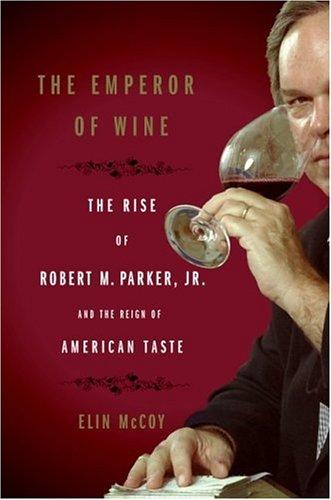 FRENCH W(H)INE:
 Both American wine and the American wine consumer continued to be regarded with condescension by the French in the mid-1970s, when the famous, or infamous Paris Tasting finally put them on notice that that America and the Americans might be more important than they had thought, even if they didn't speak French. The tasting pitted some of California's best wines against top French bottlings , and the American side won...It would be hard to imagine a story that more perfectly confirms the conservative stereotype of the French elite as ignorant chauvinists who resent the United States simply because it is better than them at just about everything.
The tasting, on May 24, 1976, took place on the patio of the elegant and luxurious Inter-Continental Hotel...The whites were poured first, then the reds. As the [all French] judges swirled, sniffed, spit, and rated each wine on a scale of 1 to 20, some were quick to pronounce smugly on a wine's origins. "That is definitely California. It has no nose," exclaimed one about a wine that turned out to be a 1973 Batard-Montrachet from Burgundy. "Ah, back to France," sighed gastronome Raymond Oliver, owner of Le Grand Vefour, after a sip of Napa Valley Chardonnay.
The judges' confusion extended to the reds. One called a Napa Valley Cabernet "certainly a premier grand cru of Bordeaux," evidence of "the magnificence of France."
When the results were tallied and announced, several judges behaved badly, refusing to give up their notes, and one even tried to change his numbers before[the organizer] whipped away the scorecards...The French panel was aghast; their wine industry, no suprise, immediately declared the tasting unfair and denounced [the organizer].
The story above is taken from The Emperor of Wine: The Rise of Robert M. Parker and the Reign of American Taste by Elin McCoy, an American journalist. The book is a biography of Parker, the most powerful wine critic in the world and the quintessentially American self-made man.
Parker isn't self-made in the sense that he grew up economically deprived, but rather, one might say, culturally deprived. Aside from a few bottles of mass-market swill, Parker never tasted real wine until he travelled to France as a college student.
While working his day job as a lawyer in a provincial Maryland bank, Parker began to publish a newsletter about wine in his spare time. Eventually, the newsletter became successful enough for Parker to quite the law and become a full-time critic.
According to author McCoy, three factors accounted for Parker's unrivaled success. First, his ability to taste wine quickly and accurately. Second, his Ralph Nader mentality, that led him to blast other wine critics (especially Europeans) as beholden to financial interests, either their own or those of the vineyards and distributors who lavished them with expensive wine and food. From the get go, Parker presented himself as an independent crusader dedicated above all to saving the American consumer from wasting his hard-earned money on overpriced but low quality wines.
Finally, Parker became the first critic with an absolute devotion to rating wines numerically. He wasn't the first to use numbers, but the most succesful. These days, vineyards stand to gain or lose millions or even tens of millions of dollars on the basis of whether Parker gives their wines an 85, a 90 or a 95 out of 100.
According to one book critic, McCoy's overly positive account of Parker's rise is the alcoholic equivalent of jingoistic, flag-waving propaganda. Yet even though McCoy's account of the 1976 Paris Tasting might warm the hearts of those who prefer their burgers with a side of freedom fries, her book should leave no doubt in any reader's mind that the French are still the masters of wine, a status they have earned because of their centuries of devotion to the wine-making arts. After all, an overwhelming majority of the rare wines to which Parker has awarded a perfect 100 are, in fact, French.
In spite of certain priceless anecdotes about French arrogance, the real message of McCoy's book is that Parker's rise has facilitated a sort of trans-Atlantic symbiosis that has been of tremendous benefit to the French as well as the Americans.
The Americans have benefitted primarily in cultural terms. Parker's discovery of wine as a young traveller in France was typical of the critics of his generation, who taught millions of (mostly upper-middle class) Americans to appreciate a beverage of tremendous subtlety and complexity that was once considered the exclusive reserve of the super-rich elites. By learning from the French and their ancient tradition of wine-making Americans in California and elsewhere have begun to produce some of the world's finest.
The benefits for the French have mostly been financial. Although sophisticates on both sides of the Atlantic denounce the absurdity of ranking wines by number, Parker's method has given millions of American consumers the confidence necessary to spend increading amounts of their income on wine. Thus, every year those millions of Americans spend billions of dollars on French wine, whereas once they spent almost nothing.
Toward the end of her book, McCoy spends many, many pages recounting widespread criticism of Parker for unilaterally imposing his narrow preferences on the global wine market. Much of this criticism confirms French stereotypes about American bluster as much as the story of the Paris Tasting confirms our stereotypes about their arrogance.
According to his critics, Parker favors only those wines with the most obvious flavors and which reach their peak tasteability the soonest. In contrast, the French have the patience necessary to appreciate subtle wines that take time to mature. Thus, the whole idea of rating wines on a 0-to-100 scale is not just absurd, but tres Americaine. After all, you wouldn't give Monet a 94 and Degas a 97, now would you?
The bitterness with which Parker and his critics (both American and French) denounce one another is strangely reminscient of the ferocity with which Bush and Chirac's advocates lashed out at another in the months before the invasion of Iraq. And yet there were no soldiers lives' or grand princples of international law at stake. Only money and wine.
Yet underneath it all was a continuing symbiosis that brought great benefits to all particiants in the debate. Although one should not infer too much about international politics from a book about wine, I think that McCoy's work serves as a powerful reminder that democratic nations have a remarkable to both cooperate and resent one another at the same time. Thus, even at the height of the conflict over invading Iraq, the Americans and the French continued to work together closely on counterrorist operations.
There are lessons here for both liberals and conservatives. The former should not see even our nastier conflicts with our European friends as an indication that the "postwar international system" has begun to crumble as a result of American unilateralism. And the latter should not react to anti-Americanism in Europe as if it were nothing more than an attenuated form of the violent and irrational anti-Americanism of the Arab "street".
Instead of "Jihad vs. McWorld", the real conflict may be Jihad vs. Merlot. (7) opinions -- Add your opinion
# Posted 12:04 AM by Ariel David Adesnik
Traces of bomb-grade uranium found two years ago in Iran came from contaminated Pakistani equipment and is not evidence of a clandestine nuclear weapons program, a group of U.S. government experts and other international scientists has determined.There is no he said/she said in the WaPo story; the conclusions of the scientists are presented as definitive. And I'm guessing that they are. The question, then, would seem to be the same one as we now ask about Iraq: Why would a government with nothing to hide constantly lie to international inspectors?
In the case of Iran, why would its government buy black market nuclear equipment from Pakistan if its intentions are peaceful? Is it simply nationalist pride that prevents cooperation with UN inspectors? Or did the Iranians, like the Iraqis, want to preserve the option to develop illlegal weapons should doing so become desirable? (0) opinions -- Add your opinion
# Posted 1:39 PM by Ariel David Adesnik
# Posted 5:29 PM by Ariel David Adesnik
# Posted 9:15 AM by Patrick Belton
# Posted 3:14 PM by Ariel David Adesnik
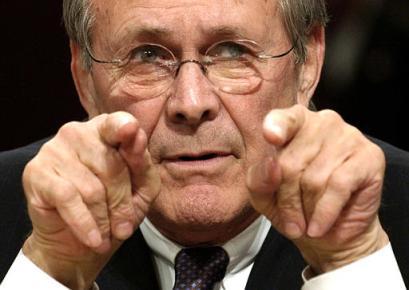 RUMSFELD IS EVIL. EEEEVIL! Democrats tend see all of the recent talk about withdrawals as part of Bush's master plan to declare victory and then scamper home from Iraq. In contrast, pro-war Republicans are saying that all of this withdrawal talk is part of a nefarious effort by the SecDef to undermine the President's resolve. Read the rest of this post.
(2) opinions
--
Add your opinion
RUMSFELD IS EVIL. EEEEVIL! Democrats tend see all of the recent talk about withdrawals as part of Bush's master plan to declare victory and then scamper home from Iraq. In contrast, pro-war Republicans are saying that all of this withdrawal talk is part of a nefarious effort by the SecDef to undermine the President's resolve. Read the rest of this post.
(2) opinions
--
Add your opinion
# Posted 1:22 AM by Ariel David Adesnik
# Posted 11:00 AM by Patrick Belton
(0) opinions -- Add your opinion
It was when the 15-year-old miscreant was hauled into court that the problem was first noticed.
Angered by his unruly, boozed-up behaviour, police had hoped magistrates would punish the youth for breaching his Asbo [i.e., anti-social behaviour order]. He hadn't.
Closer examination revealed that he had mistakenly been ordered not to be in public "without" alcohol and that he was also duty bound to act in a threatening manner likely to cause harassment, alarm and distress to others.
After the boy escaped punishment as a result of the misprint, the officials behind the mistake were asked to deliver a new Asbo with more appropriate wording, the Daily Mirror reported.
# Posted 10:21 PM by Ariel David Adesnik
# Posted 6:34 PM by Ariel David Adesnik
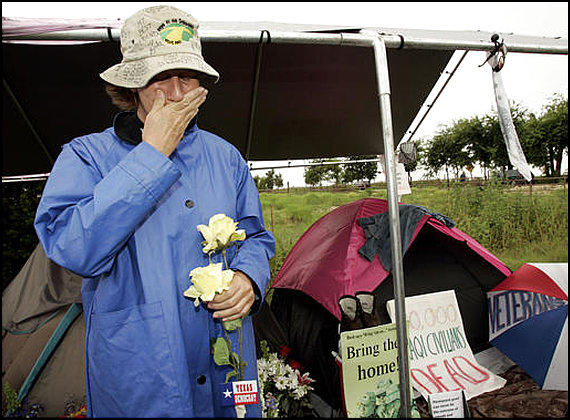 CINDY SHEEHAN, DEMOCRATIC SAVIOR? No matter what you think of her politics, you have to give Cindy Sheehan credit for staging one of the most brilliant pieces of political theater that Americans have encountered in a very long time.
Over the past week, Sheehan has done a perfect job of framing herself as a lonely voice in the wilderness of Crawford, attempting to soften the heart of an American pharoah hiding behind the darkened windows of his limousine. Read the rest of this post. (0) opinions -- Add your opinion
# Posted 2:39 AM by Ariel David Adesnik
# Posted 7:30 PM by Ariel David Adesnik
# Posted 8:57 AM by Patrick Belton
# Posted 8:52 AM by Patrick Belton
(Note: OxBlog does not condone drug use. Or customs officials.) (11) opinions -- Add your opinion
# Posted 12:37 PM by Patrick Belton
# Posted 9:49 AM by Patrick Belton
Many assume that if the scriptures are not historically and scientifically correct, they cannot be true at all. But this was not how the scripture was originally conceived. All the verses of the Qur’an, for example, are called ‘parables’ (ayat); its images of paradise, hell and the last judgment are also ayat, pointers to transcendent realities that we can only glimpse through signs and symbols.Extracted rather heavily from her piece on p. 25 of today’s aforementioned newspaper, the last in a series of thoughtful pieces which Armstrong has contributed since the London bombings. An open note to propagandists of various stripes: distribute your newspaper for free in French bakeries with nice jazz and adjoining coffeeshops, and I will read them. Same principle also operative in the case of by far the best jazz radio station in Washington, whose transmissions periodically are interrupted by the mild trotskyist harmonies of Pacific Radio, several cumulative hours of worth I have listened to in my life rather than change the station. (0) opinions -- Add your opinion
Does the Qur’an really instruct Muslims to slay unbelievers wherever they find them? Does it promise the suicide bomber instant paradise and 70 virgins? If so, Islam is clearly chronically prone to terrorism.
People do not robotically obey every single edict of their sacred texts. If they did, the world would be full of Christians who love their enemies and turn the other cheek when attacked.
Part of the problem is that we are now reading our scriptures instead of listening to them. Most of us are accustomed to acquiring information instantly at the click of a mouse, and have neither the talent nor the patience for the disciplines that characterised pre-modern interpretation.
Historians have noted that the shift from oral to written scripture often results in strident, misplaced certainty. Reading gives people the impression that they have an immediate grasp of their scripture; they are not compelled by a teacher to appreciate its complexity. Without the aesthetic and ethical disciplines of ritual, they can approach a text in purely cerebral fashion, missing the emotive and therapeutic aspects of its stories and instructions.
Indeed, the word qur’an means ‘recitation’. Much of the meaning is derived from sound patterns that link one passage to another, so that Muslims who hear extracts chanted aloud thousands of times in the course of a lifetime acquire a tacit understanding that one teaching is always qualified and supplemented by other texts, and cannot be seen in isolation. The words that they hear again and again are not ‘holy war’, but ‘kindness,’ ‘courtesy’, ‘peace’, ‘justice’, and ‘compassion.’
# Posted 9:48 AM by Patrick Belton
And so to the latest stunt by People for the Ethical Treatment of Animals, comfortably the most intelligent piece of advocacy for the movement since Paul McCartney described slaughtering animals for food as morally equivalent to ‘what Hitler did to the fucking Jews’. Sir Macca’s argument is extrapolated in Peta’s latest touring exhibition – ‘Are Animals the New Slaves?’ – which touched down in New Haven, Connecticut, this week to a response best described as tepid. Local residents didn’t seem to go a bundle on the giant photographs of people being tortured – mainly black Americans but the odd concentration camp victim too – next to photos of animals being killed or sold. Still, Peta’s hope that the exhibit will ‘generate dialogue’ appears to have been realised. ‘Once again, black people are being pimped,’ the state president of the NAACP is quoted as saying, having arrived on the scene in minutes. ‘You used us. You have used us enough. Take it down immediately.’ Other snatches of ‘dialogue’ quoted in the local Register newspaper include a chap shouting ‘You can’t compare me to a freaking cow!’ and another man who began his response with the words ‘I have relatives who wer in concentration camps…’ Quite a success, all told, and we wish Peta all the best once this thoughtful roadshow reaches the Deep South.by the always clever and witty Marina Hyde, p. 26, Thursday print edition. (0) opinions -- Add your opinion
# Posted 9:47 AM by Patrick Belton
# Posted 9:46 AM by Patrick Belton
# Posted 1:05 AM by Ariel David Adesnik
 NOT MY GENERATION: I regret the loss of Peter Jennings, a man of great integrity, at an age -- 67 -- which now must be considered terribly young. But I am uncomfortable with the way that the editors of the NYT and WaPo have taken this as an occasion to praise the centralization of the American media and launch not-so-subtle attacks on
 "Cable, satellite networks and the vast, chattering online universe [that has] gone far to create a world in which no three men will ever again deliver the news to an entire nation with such Jovian authority."Well you know what? Jovian authority sucks. Jovian authority is what gave us Jayson Blair and CBS's forged documents about Bush and the National Guard.
But what's really ironic here is that journalists should be the first ones to remind us that Jovian authority sucks. In the crucible of modern American journalism known as Vietnam, correspondents earned their stripes by pulling back the curtain that protected the Jovian authority with which President Johnson and his generals declared the war effort to be a great success.
Then, in the aftermath of Watergate and Vietnam, America found itself in a situation where the network anchormen, and not the president of the United States, enjoyed the benefits of Jovian authority. Unsurprisingly, this imbalance of power is what has led the editors of the Times and the Post, along with the rest of the embattled media, to wax nostalgic for days gone by. The editors of the Times lament that
The audience of people who routinely stop and sit down around dinnertime to see the news is steadily shrinking and swiftly aging. The next generation seems ready to taste the huge buffet of news and mock-news in print and on radio, television and the Internet.First of all, my parents had a hard and fast rule that the television got turned off before my family sat down for dinner. More importantly, I can't say that I've ever been all that excited about the evening news because it is suprsingly short on content.
If you read a newspaper for 30 minutes (yes, even the NYT), you will learn a heckuva lot more than you would by watching the news. Besides, if you watch the news, you have to spend around a fifth of your time watching commercials.
Understandly, the experience of getting one's news from the same handsome man at 6:30pm every evening for twenty or thirty years generates a certain emotional attachment to the way things were. But frankly, I'm glad that my generation has been liberated from this maudlin tradition and the Jovian authority it generates. (0) opinions -- Add your opinion
# Posted 12:43 AM by Ariel David Adesnik
There is no further room for obfuscation, and no further reason to give Iranians the benefit of the doubt: The real aim of the Iranian nuclear program is nuclear weapons, not electric power.At the same time, the editors of the Post argue that
The experience of letting the Europeans do it their way, offering trade and economic incentives before bringing in sanctions or making any military threats, has been enormously important...Now, any steps taken to prevent Iran from getting nuclear weapons will have international credibility.Finally, the Post adds a caveat
What remains to be seen is whether the Europeans will come through, as they have promised they would, with a tough-minded push for sanctions.Consider, for a moment, the tension between those last two statements. What if the Europeans don't follow through? If, at that point, we strike out on our own, will we no longer have "international credibility"? In other words, is the price of credibility that we always follow the European lead?
In the case of Iran, I don't mind the current experiment in multilateralism. Since the current National Intelligence Estimate on Iran argues with considerable authority that Teheran is between five and ten years away from having a bomb, we have enough time to test the Europeans' mettle as negotiators.
But how often do belligerent dictatorships give up their hopes of building nuclear weapons? The approximate answer to that question is never. Although promoting democracy in Iran is a long shot, I'm guessing that pushing the fundamentalists out of power is only the way to moderate Iranian behavior. (0) opinions -- Add your opinion
# Posted 11:56 PM by Ariel David Adesnik
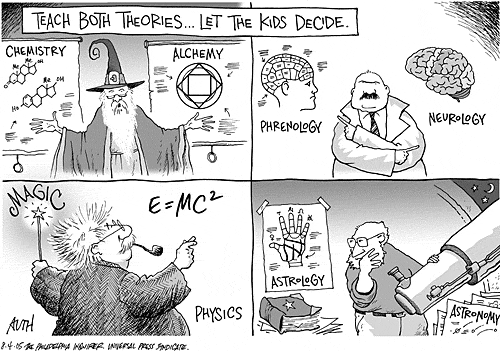
Naturally, I do have a personal opinion about whether Darwinism or Intelligent Design is a better theory. The answer is Darwinism, hands down. In fact, I don't even belive that I.D. deserves to be described as theory in the scientific sense of the word.
However, that does not mean that I believe the best way to deal with the popularity of I.D. is to denounce it as a malicious hoax, a la Paul Krugman. Nor do I think that taunting and consdescension, in the manner of the cartoon above, serve much of a purpose.
But take a second look at that cartoon and ask yourself why alchemy, phrenology, magic and astrology aren't taken more seriously on the campuses of Harvard, Stanford and the University of Chicago. Is it because the vitriolic denunciations of secular intellectuals have persuaded people that these four pseudo-sciences are full of bunk, or is it because pseudo-sciences can't survive the laboratory competitions imposed on every competing theory by modern science?
You might say that when it comes to Intelligent Design, I prefer a Darwinian approach. Let the better theory survive. In fact, I'm even willing to let local school boards in Pennsylvania and Kansas mandate that I.D. get a fair hearing in the classroom. Let the kids read books and essays by Michael Behe and William Dembski, alongside criticism of their work. (After all, getting kids to read books about anything would be an important accomplishment for many of our public schools.)
Some of the kids who read these books will be persuaded by what they read. I'm guessing that most of them won't. And that might even be besides the point, since the moment any of these kids steps onto a college campus they will be thoroughly indoctrinated by Darwin's heirs. (I was. I don't regret it.)
But here's the real silver lining for all of those liberals who are concerned about Christian fundamentalism invading our schools in the guise of Intelligent Design. If conservatives are serious about "teaching the controversy", then perhaps they will also be willing to teach the controversy when it comes to liberal add-ons to the public school curriculum, such as birth control and homosexuality.
When it comes to education, I like to think of myself as a true liberal: let the kids sample everything, instead of waging culture wars designed to deny them access to controversial ideas. (0) opinions -- Add your opinion
# Posted 12:05 AM by Ariel David Adesnik
Although I stand by every word in my post, there was an ulterior motive that reinforced my decision to write it. All too often, the extraordinarily talented young men and women on the Rhodes list display a lack of interest in the culture of hatred and anti-Semitism that motivates Palestinian terrorists.All those who would condemn the bombings that have wreaked so much havoc in London, Madrid, New York and numerous Israeli cities must also condemn in the strongest terms possible the vicious attack by an Israeli settler last Thursday that resulted in the murder of four Arab citizens in Israel. You can read more about this attack in the Observer and the Washington Post.
I fully endorse the statement by the Prime Minister's office in Jerusalem that this was "a reprehensible act by a bloodthirsty Jewish terrorist who sought to attack innocent Israeli citizens." The intentional slaughter of innocents is murder. The intentional slaughter of innocents in order to promote a political objective is terrorism and murder.
There is no excuse for such behavior. Period. No matter how much you or I suffers, we always have the choice to respect life and reject murder. But the condemnation of terrorism must go far beyond the condemnation of those who pull the trigger.Thursday's murderer, Eden Natan Zada, belonged to a sick culture that glorifies murder in the name of religion and politics. This same culture helped produce Baruch Goldstein, the Jewish terrorist who murdered 29 Arabs more than a decade ago. And it helped produce Yigal Amir, the terrorist who shot and killed Yitzhak Rabin because of Rabin's committment to peace.
This culture draws its strength from rabbis such as the late Meir Kahane, who preached violence in the name of Judaism, and from terrorist organizations such as Kach, which promotes Kahane's ideas. This culture has its own educational institutions that instill hatred and contempt for Arabs and Muslims.
Rather than being ashamed of itself, this sick culture venerates terrorists such as Baruch Goldstein and transforms their graves into religious shrines. Eden Natan Zada sought to emulate Baruch Goldstein and now may find himself buried next to the elder terrorist.
Although individual terrorists have the choice to respect life and reject murder, cultures of hatred encourage them to make the wrong choice. And for as long as there are weak and selfish men and women, culture of hatred will help turn them into terrorists.
Thus we cannot fulfill our obligation to condemn terrorism simply by condemning individual acts of terror. Instead, we must make a constant effort necessary to expose and dismantle the organzations that provide terrorists with moral support and legitimation.
Sincerely,
David
All too often, those Scholars who describe themselves as exponents of a reasonable and moderate approach to the Israeli-Palestinian conflict tend to frame Palestinian violence against Israeli civilians as a response, perhaps inevitable, to the Israeli occupation. This is not because those Scholars have a pro-Palestinian agenda, but rather because the intellectual culture of Oxford, England and Europe frames anti-Israeli terrorism (and often anti-American and anti-European terrorism as well) as a response to deprivation and oppression, rather than an expression of hatred.
Why don't I make this point explicitly in my post? Because experience suggests that when one who is Jewish and American must address a mostly non-Jewish and non-American audience, one must go to great lengths to demonstrate that one condemns Palestinian terrorism because it is terrorism and not because it is Palestinian. (0) opinions -- Add your opinion
# Posted 10:43 AM by Ariel David Adesnik
# Posted 10:44 AM by Patrick Belton
# Posted 8:22 AM by Ariel David Adesnik
 It was only while reading the brief epilogue to D'Souza's work (pp. 257-264, added to the paperback edition in 1999) that I began to get a sense of why the author was so well attuned to divides within the Republican party of the 1980s, a time now celebrated by most Republicans as a triumphant era of unity and purpose, all made possible by the Great Communicator.
The reason is that D'Souza was writing in the aftermath of Clinton's re-election, at a time of despair and recrimination within the GOP. The fact that Republicans now control every branch of the government often makes us forget how divided the party was less than a decade ago. By the same token, I wouldn't be surprised, if after Hillary's re-elections in 2012, neither Democrats nor Republicans remember how divided the Democratic party was in the age of Howard Dean.
Anyhow, I thought it might be a good idea to quote D'Souza extensively, since his criticism of fellow Republicans is something that hasn't been heard for quite some time:
Since Reagan made his exit from the scene, American politics has dominated by the search for his successor...I think it would be fair that this sort of criticism has become almost entirely verboten within the GOP since Bush's son became president in 2001. It also illustrates why George W. Bush has been such an effective uniter (and not a divider) within his own party; he is the literal son of one wing of the party and the metaphorical son of the other.
Bush was the annointed beneficiary of Reagan who, immediately after the 1988 election, seemed to forget the man to whom he owed his success. Even after working closely with Reagan for eight years, Bush seemed to have learned surprisingly little from him...
Bush entered the White House, distanced himself from Reagan's agenda, and began his own search for what he called "the vision thing." Americans eventually discovered that Bush's campaign rhetoric was an act, and that his real purpose in seeking the presidency, after serving in a series of high-level government jobs, was scarcely more than to complete his resume.
Moving on:
After a series of showdowns with President Clinton, Gingrich's personal popularity plummeted, making him one of the most detested figures in American politics...How remarkably strange that such prognostications of doom and gloom could have seemed plausible only a handful of years before the GOP consolidated its current dominance. Is the lesson here that such dominance is an illusion? That the Democrats may rise from the ashes at a moment's notice?
If Bush had been a terrible candidate in 1992, Dole was even worse. In the wake of his ignomininous defeat, the Republican party and the conservative intellectual movement are now aimless and frustrated. The 1998 midterm election was also a disaster, with Republicans losing seats in the House and Gingrich resigning in disgrace.
The GOP leadership now seems utterly bereft of either vision or the resolution to pursue any major new initiatives. Instead, the emasculated Republicans seem obsessed with preserving their fragile congressional majority by testing their ideas against public opinion surveys and focus groups...
The single most important reason for the failure of the Republicans and conservative intellectuals is that both groups have lost their faith in the American people. In the 1980s Reagan converted the right, traditionally the party of pessimism, into an optimistic movement. So perhaps it is not surprising that once Reagan left, the GOP and the conservative leaders reverted to their old familiar ways. If the Republicans fail to learn Reagan's lesson, they will lose their congressional majority and once again become a minority party and a marginal political movement.
Or is this dominance perhaps an accidental vindication of D'Souza's hope for the emergence of a more Reaganesque GOP? After all, who could possibly be more Reaganesque than George W. Bush, all the way down to the cowboy boots that his fans adore and that his critics resent?
Frankly, I'm not sure what the lesson here is. (Try writing that in an op-ed.) At minimum, the placement of current events within a bit of historical context serves to remind us how so much of what we take for granted simply was not so very, very recently. (0) opinions -- Add your opinion
# Posted 8:03 AM by Ariel David Adesnik
The first of the two has a special resonance for those of us who have personally endured the perils of the British welfare state. It is also one of those stories that Reagan probably would've told only in all-male company:
Winston Churchill...arrived at a London hotel for a function when he decided to stop by the men's room. No sooner did he find a position to relieve himself than who should enter the men's room but his old political rival Clement Attlee. To Churchill's surprise, Attlee came and stood right next to him, so Churchill nervously moved a few places away. "My, my, Winston," Attlee exclaimed. "Are we being modest?" Churchill replied, "Not at all Clement. It's just that whenever you see something that is large, privately owned and working well, you want to nationalize it." (pp. 209)The second of the two is one Reagan's many jokes about life in the Soviet Union:
A man...goes to the Soviet bureau of transportation to order an automobile. He is informed that he will have to put down his money now, but there is a ten-year wait. Nevertheless, he fills out the various forms and has them processed through the various agencies, and he signs in countless places, and finally he gets to the last agency, where they put the stamp on his papers. He pays them his money, and they say, "Come back in ten years and your car." He asks, "Morning or afternoon?" The man in the agency says, "We're talking about ten years from now. What difference does it make? He replies, "The plumber is coming in the morning." (pp. 139)And to think that some day our children won't even understand why that's funny. (0) opinions -- Add your opinion
# Posted 3:07 AM by Ariel David Adesnik
After giving a speech about Islam, I met this young magazine editor to talk about Islam's lost tradition of critical thinking and reasoned debate. But we never got to that topic. Instead, we got stuck on the July 7 bombings in London and what might have compelled four young, British-raised, observant Muslim men to blow themselves up while taking innocent others with them.In the United States, however, Muslim leaders seem to be waking up to the importance of destroying the perverted ideas on which terrorists thrive. Just this week, leading Muslims scholars issued a fatwa that condemns terrorism unequivocally. I wonder what sort of repsonse this will provoke among Muslims ins Europe and the Middle East.
She emphasized their "relative economic deprivation." I answered that the lads had immigrant parents who had worked hard to make something of themselves. I reminded her that several of the 9/11 hijackers came from wealthy families, and it's not as if they left the boys out of the will...
By this time, the Oxford student had grown somber. It was clear I had let her down. I had failed to appreciate that the London bombers were victims of British society...
The student shifted uncomfortably. She just couldn't bring herself to examine my suggestion seriously. And I suppose I couldn't expect her to. Not when Muslim leaders themselves won't go there. Iqbal Sacranie, secretary-general for the Muslim Council of Britain, is an example. In the midst of a debate with me, he listed potential incentives to bomb, including "alienation" and "segregation." But Islam? God forbid that the possibility even be entertained.
Wouldn't it be curious if American Muslims became the driving force behind the anti-terrorist movement in the Islamic world? These days, Americans talk more and more about exporting democracy to the Middle East. But who ever thought that Americans would also be exporting a new and more enlightened brand of Islam to the Muslim world?
As my colleagues in Oxford might say, it's coals to Newcastle. (0) opinions -- Add your opinion
# Posted 2:12 AM by Ariel David Adesnik
JW describes himself as one of the
Modern liberal internationalists...like Michael Ignatieff, George Packer, Michael Walzer and Christopher Hitchens.Although I admire all four of those men (and would add Peter Beinart to the list), I would hesitate to describe their approach to foreign policy as liberal internationalism. As a result of their strong support for humanitarian intervention and other muscular approaches to democracy and human rights, Ignatieff, Packer, et al. often find themselves isolated within a Democratic Party that has long hesitated to embrace such objectives -- and now more than ever since George W. Bush has adopted those objectives as his own.
Strictly speaking, the Ignatieff/Beinart "liberal hawk" school of thinking is a form of liberal internationalism. And JW is correct to argue that Krauthammer should not automatically equate liberal internationalism with the instinctive multilateralism and deference to international law of those who opposed the invasion of Iraq on the simple grounds that it was opposed by the United Nations.
Yet in colloquial terms, I think that Krauthammer's definition of liberal internationalism is the one that pervades American political culture, thanks to Jimmy Carter and other liberal icons, such as both of our senators from Massachusetts. Another part of the problem is the name itself, liberal internationalism. To what does 'internationalism' refer if not a commitment to the strengthening of international organizations and international law?
Historically, that definition is not correct. At first, internationalism (in the American, not the European or Marxist sense of the word) was simply the inverse of isolationism. Thus JW is correct to invoke Wilson, FDR and Truman as examples of liberal internationalists who did not shy away from the use of force, or even the bypassing of international organizations, in order to promote American security and American ideals.
But those are the liberal internationalists of yesteryear. Admirably, certain young idealists, such as those of the Truman Project, have embarked on an ambitious and impressive to ressurect this tradition under the Democratic umbrella. However, I sense that the old definition of the term liberal internationalist was a casualty of the Vietnam war. In order to succeed today, Truman's heirs will have to describe themselves in a manner that forcefully indicates why they are not what we tend think of as liberal internationalists. (1) opinions -- Add your opinion

