Front page
XML Feed
Read Our
"Love your site" -- Dan Savage
"A great read" -- Fareed Zakaria
"I enjoy OxBlog very much" -- Michael Barone
OxBlog: Trying to live up to the hype since April 23, 2002!
David Adesnik, a research analyst in Washington DC, received his doctorate in international relations from Oxford.
Email David
![[Powered by Blogger]](http://buttons.blogger.com/bloggerbutton1.gif)
The Media:
NYT
WaPo
OpinionJournal
TNR
Weekly Standard
NRO
Slate
Commentary
BBC
Other Blogs We Like:
George Washington:
InstaPundit
James Wilson:
Brett Marston
Alexis de Tocqueville:
American Scene
Crescat Sententia
Crooked Timber
Galley Slaves
Eve Tushnet
Christopher Hitchens
Theodore Roosevelt:
Amygdala
Belgravia Dispatch
Phil Carter
Joyful Christian
Joe Gandelman
Adrianne Truett
Winds of Change
Pejman Yousefzadeh
Global Guerrillas
Calvin Coolidge:
ScrappleFace
Winston Churchill:
Sasha Castel
Andrew Sullivan
Tim Blair
Franklin Roosevelt:
Kevin Drum
Josh Marshall
Matt Yglesias
Democracy Arsenal
Dan Nexon
David Ben Gurion:
GedankenPundit
Kesher Talk
Friedrich Hayek:
Jane Galt
Virginia Postrel
Natalie Solent
VodkaPundit
Matt Welch
Ronald Reagan:
Power Line
RealClearPolitics
Worldwide Standard
RedState
Liz Mair
Daniel Patrick Moynihan:
Daniel Drezner
How Appealing
# Posted 7:26 PM by Ariel David Adesnik 
Mr. Dershowitz has proven himself to be so blinded by his bias towards Israel that to even make mention of him in an academic discussion induces mirth.I'm not sure if that says more about Dershowitz or more about the academy, but anyhow, my opinion of Dershowitz's book has diminished considerably after reading the first hundred pages, which cover Israeli/Palestinian history from the Jewish migration of the late 19th century to the first Arab-Israeli war of 1947-1949.
The most important source Dershowitz relies on is Benny Morris' Righteous Victims, published in 1999. In fact, Dershowitz relies on Morris so heavily that The Case for Israel almost becomes a summary of Righteous Victims, or perhaps a commentary on Morris' book informed by supplementary material.
Which is not to say that Morris is a bad source. In fact, he tends to be a good one because his he still has the grudging respect of the academic left while his politics are considerably to their right. The problem is when Dershowitz cites Morris selectively in a way that downplays Israeli brutality while emphasizing that of the Palestinian Arabs.
The most important case in point is Dershowitz's chapter on the origins of the Palestinian refugee crisis, the subject of Morris' best-known research. Accordingly, 21 of 49 footnotes cites Morris' work.
The first tip-off that Dershowitz has read Morris selectively is his assertion that:
While the Arab armies tried to kill Jewish civilians and did in fact massacre many who tried to escape, the Israeli army allowed Arab civilians to flee to Arab-controlled areas. (p.79)Yet as I summarized in a recent post about Morris' work, he believes that (especially) after the Arab invasion of Israel in May 1948, the Israeli army mounted a very aggressive effort to force Palestinians out of their homes, often by destroying their villages or worse. If Dershowitz had brought this up later in the chapter, his initial phrasing might not be a problem. But no discussion of the expulsions is forthcoming.
Among the best known of those expulsions involved the exodus of 60,000 Arabs from Lydda and Ramle. FYI, at the beginning of each chapter of The Case for Israel, Dershowitz includes a series of topical quotations from Israel's harshest critics which he intends to debunk. In his chapter on the refugee problem, he includes a quote from Edward Said who refers to the explusion from Lydda and Ramle. Yet Dershowitz never confirms that this expulsion was real, instead leaving the casual reader to assume that this incident was just one more fabrication invented by Israel's critics.
Another serious omission by Dershowitz concerns the terrorist activities of hardline Jewish organizations such as the Irgun and Lehi (both of whose leaders would later serve as Prime Minister of the Jewish state). According to Morris, Lehi and the Irgun were responsible for scores of attacks on civilian targets, which helped persuade countless Arabs to take flight as Israeli forces marched forward. (Certain Haganah attacks also straddled the line between military operations and terorrism.)
One Jewish atrocity that Dershowitz does mention is the massacre at Deir Yassin, perpetrated by Lehi and Irgun forces. Dershowitz calls it a massacre, but his account is so convoluted and fills with caveats, you would never know, as Morris writes, that:
Whole families were riddled with bullets and grenade fragments and buried and buried when houses were blown up on top of them.That quotation is taken from page 208 of Righteous Vicitms, the same page Dershowitz relies on for his account of Deir Yassin. Not surprisingly, Dershowitz is much more lucid in his description of the retaliation for Deir Yassin in which Arab militiamen surrounded a Jewish convoy, fought off a handful of defenders, then slaughtered seventy civilian passengers, many of whom the militiamen burned alive in the buses where they were trapped.
Dershowitz is also very lucid in his description of other Arab atrocities as well taking special care to note all of those Arab leaders who called for the extermination of the Jewish race after the invasion of the Jewish state. For good reason, Dershowitz lavishes attention on Haj Amin al-Husseini, the grand mufti of Jerusalem and official head of the Palestinian community (appointed by the British).
Citing Morris, Dershowitz recounts that Husseini received direct material support from Himmler's SS and that Adolf Eichmann actually visited Husseini in Palestine. Hussieni then spent most of the war in Berlin, where he broadcast viciously anti-Semitic propaganda on Berlin Radio. Drawing on Morris again, Dershowitz also recounts that Husseini personally intervened with Eichmann on one occasion after discovering that Hungarian authorities were going to allow thousands of Jewish children to escape from the Nazis. Eichmann then saw to it that those children were sent to the death camps.
Finally, Dershowitz takes care to mention Yasser Arafat's fondness for Husseini, whom he described as his "hero" as recently as 2002. (pp.53-62)
If Dershowitz had been able to step out of his prosecutorial mindset, he might have protected his credibility by quoting Morris fairly and letting the evidence speak for itself. If Morris' history is accurate, then no friend of Israel should be concerned about Palestinians invoking the events of the 1940s to demonstrate their innocence.
Labels: Alan Dershowitz, Benny Morris, Israel, Palestinians
(11) opinions -- Add your opinion
# Posted 10:24 PM by Ariel David Adesnik
 THE BIRTH OF THE PALESTINIAN REFUGEE PROBLEM is the title of the first book written by Israeli historian Benny Morris. When first published in the late 1980s, it provoked a harsh reaction from numerous Israelis who felt that Morris had slandered the founding fathers of the Jewish state. Morris has continued to publish on the subject of Palestinian refugees, although his politics have shifted to the right (in an Israeli context).
I’ve taken an interest in Morris’ work because of an ongoing discussion about the Israeli-Palestinian conflict I’ve been having with a colleague of mine, whose assessment of the conflict is diametrically opposed to my own. Roughly speaking, I’m pro-Israeli and she’s pro-Palestinian. We’re both for human rights and against violence, especially against civilians, but those shared principles are rarely enough to produce consensus when it comes to the politics of the Middle East.
Recently, my colleague has raised the question of the 700,000 or so Palestinian refugees who fled their homes during the Arab-Israeli war of 1948-1949. Arabs refer to this flight as the nakhba, or catastrophe. For many advocates of the Palestinian cause, the nakhba was a historic injustice that fatally compromised the legitimacy of the Jewish state.
But what, precisely, was the nakhba? My limited knowledge of the subject derives from Benny Morris’ 1999 survey of the Israeli-Palestinian conflict, entitled Righteous Victims. However, I read the book in 2001, so my recollections of its content were vague at best until I stopped by the library today to refresh my memory.
In the coming months, I intend to read two full books on the subject of the refugees. One is Morris’ latest contribution to the debate, entitled The Birth of the Palestinian Refugee Problem Revisited. The other is The Ethnic Cleansing of Palestine by Ilan Pappe, an academic historian from Israel whose choice of title indicates his position on the subject.
But for the moment, I thought I would post a series of quotations from Righteous Victims that summarize Morris’ view of the nakhba. All the quotations are from a section of the book entitled the “The Birth of the Palestinian Refugee Problem”. (pp.252-258) Morris writes:
Why 700,000 people became refugees was hotly disputed between Israel and its supporters and the Arabs and theirs. Israeli spokesmen – including “official” historians and writers of textbooks – maintained that the Arabs had fled “voluntarily”, or because the Palestinian and Arab states’ leaders had urged or ordered them to leave, to clear the ground for the invasion of May 15 and enable their spokesmen to claim that they had been systematically expelled.The last sentence of that quotation may hint at why pro-Palestinian writers tend to resent Morris as well. How can he write about “the depth of Arab animosity toward the Jews” without writing about the depth of Jewish animosity toward the Arabs? I consider his phrasing to reflect a reasonable judgment based on the evidence, but to those who disagree, his phrasing may seem like an argument by assertion.
Arab spokesmen countered that Israel had systematically and with premeditation expelled the refugees. Documentation that surfaced in massive quantities during the 1980s in Israeli and Western archives has demonstrated that neither “official” version is accurate or sufficient.
The creation of the problem was almost inevitable, given the geographical intermixing of the population, the history of Arab-Jewish hostility since 1917, the rejection by both sides of a binational solution, and the depth of Arab animosity toward the Jews and fears of coming under Jewish rule.
 Regardless, my sense is that pro-Palestinian writers tend to grudgingly acknowledge Morris’ legitimacy as a scholarly contributor to the ongoing debate, in contrast to, say, Alan Dershowitz, whose opinions they confidently dismiss out of hand the way I would those of Noam Chomsky.
But getting back to the subject, I think it’s important to provide some more detail about Morris’ account of the nakhba, even though the paragraphs above provide a reasonably good summary. According to Morris, the refugee crisis developed in four stages during the war, which I will describe below.
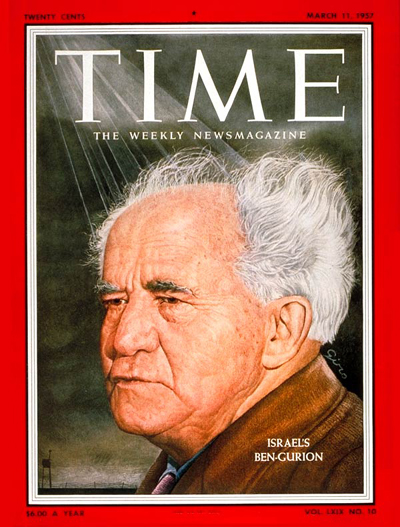
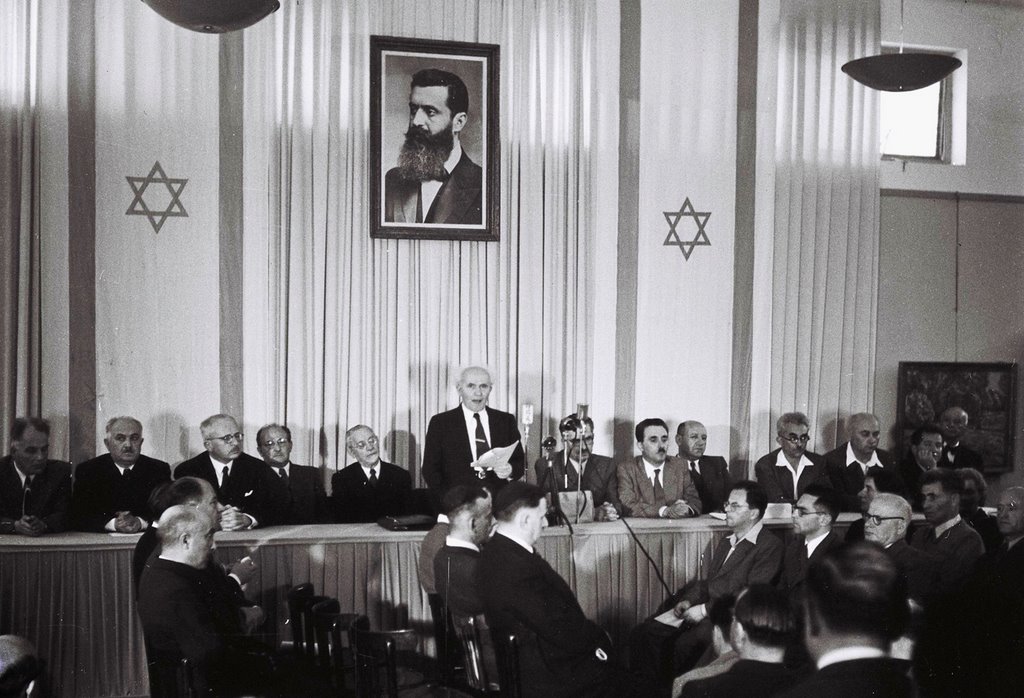
But first, Morris points out that Zionist leaders such as David Ben-Gurion considered the forcible transfer of Palestinians to be necessary and just. As the future Prime Minister said in 1938, “I support compulsory transfer. I do not see in it anything immoral.” Other influential Israelis agreed, although both they and Ben Gurion felt that it would be best not to make their opinions known.
This position, however, does not seem to have resulted in any clear plan to force out the Palestinians. Rather, the refugee crisis developed in a series of unplanned stages:
The first was between December 1947 and March 1948, when the Yishuv [Jewish community in Palestine] was on the defensive and upper- and middle-class Arabs – perhaps as many as seventy-five thousand – fled, mainly from the mixed cities, or sent their dependents to the West Bank, Lebanon, Egypt, Syria or Transjordan. In this context their can be no exaggerating the detrimental effect on Arab morale of the IZL and LHI [i.e. Israeli militant/terrorist groups’] bombing campaigns in the big towns…I’m guessing that many of you, like me, would be interested in further details about those massacres, as well as their magnitude relative to Arab massacres. However, I don’t have such information on hand at the moment.
This was the background to the second stage, the mass flight from urban neighborhoods and rural areas overrun by the Jewish forces during spring 1948. The earlier flight of the elite sapped popular morale and gave the masses an example to emulate.
The principal cause of the mass flight of April-June was Jewish military attack, or fears of such attack. Almost every instance…was the direct and immediate result of an attack on and conquest of Arab neighborhoods and towns. In no case did a population abandon its homes before an attack; in almost all cases it did so on the very day of the attack and in the days immediately following. And flight proved to be contagious. The fall of, and flight from, the big cities – principally Haifa and Jaffa – radiated pessimism and despair to surrounding villages…
The slaughter on April 9 of the villagers of Deir Yassin, augmented by Arab atrocity propaganda regarding what happened there, both reinforced and symbolized [the tendency toward flight]. Fear that the same fate might befall them propelled villagers to flight, and this “atrocity factor” was reinforced periodically during the months of fighting by other Jewish massacres, especially in October…Altogether about two to three undred thousand Arabs fled their homes during this second stage of the exodus.
Anyhow, before this post gets too long, let’s move on to stages three and four. The political and military environment for these stages was very different, since they followed the official founding of the Jewish state and the subsequent declarations of war by its neighbors. Morris writes:
The pan-Arab invasion of May 15 clearly hardened Israel’s resolve regarding the Palestinian civilian population, for good military and political reasons.That of course is a judgment, with which pro-Palestinian writers would vigorously disagree. However, I tend to agree. Once invaded by Arab neighbors who rejected its right to exist, Israel had to be much more cautious about a resident Arab population that clearly sympathized with the invaders. But how far does caution go before it becomes provocation and abuse? I don’t have an answer to that question just yet. So back to the narrative:
In the third and fourth stages of the exodus, in July and October-November 1948, about three hundred thousand more Arabs became refugees, including the sixty thousand inhabitants of Lydda and Ramle who were expelled by IDF troops…Finally, there was unusual coda to these events, in terms of discussions about allowing refugees to return. One relatively deficient offer from the Israelis would have resulted in the return of 65,000 refugees. The terms of a second offer were that:
During the second half of the war, there was far less “spontaneous” flight. Most of the exodus at this time was due to clear, direct causes, including brutal expulsions and deliberate harassment.
Ben-Gurion clearly wanted as few Arabs as possible to remain in the Jewish state. But there was still no systematic expulsion policy; it was never, as far as we know, discussed or decided upon at Cabinet or IDF general staff meetings.
Israel might be willing to incorporate the Gaza Strip into its territory and absorb the Strip’s population of 60,000 native inhabitants and 200,000 refugees. In this way, Israel would have done more than its fair share toward resolving the problem – which, its officials tirelessly argued, was not of their own making. (Or, as Ben-Gurion was fond of telling Western interlocutors, “Israel did not expel a single Arab.”)At least according to Morris, those are those facts. What, then, is their significance, especially their moral significance? The nakhba was certainly a great tragedy, for which its victims deserve considerable sympathy.
The offer was seen by the Arabs as far too little, and most of the Arab states insisted that Israel take back all of the refugees.
A moral evaluation of the first two stages of the flight would seem to rest on one’s evaluation of the Palestinian Arabs’ fears. Was flight the only rational response to Jewish occupation, given that several massacres had taken place? Or did Arabs mainly fear that the Jews would treat them as Arabs treated vulnerable Jewish populations in the past?
An alternative hypothesis is that during the first two stages, those who fled had reasonable expectations of returning to their homes once the war was over. As Morris points out, the upper- and middle-classes had fled violence before, only to return to their homes.
Then, the pan-Arab invasion of May 1948 changed the situation dramatically. The stakes were raised tremendously for both sides. A strong case can be made that the Jewish side was fighting for its very existence. The Arab side faced the prospect that any land lost to the Jews would be lost forever.
For the moment, I’m still not sure how I feel about compulsory expulsion, planned or unplanned. Was it a military necessity? Was any effort made to conduct expulsions in a humane manner? If one sees the war of 1948-1949 as a war for Jewish survival, then these questions may become secondary.
But even if it weren’t a war for survival, the Israeli offer to accept back a significant number of refugees strikes me as morally significant. The Israelis sought a compromise solution that shared out the burden of settling the refugees. Of course, if one sees the nakhba as entirely the Israelis’ fault, then no compromise is just.
Yet from my perspective, it is the pan-Arab invasion of May 1948 that was the most important cause of the nakhba. As I see it, there was no reason for this invasion to happen, other than a total unwillingness by Arabs states to accept the existence of a Jewish neighbor. If not for the invasion, half of the refugees might never have left and the other half might have been resettled, even in their own homes.
I will close this very long post with another question. How do pro-Palestinian writers justify the invasion of May 1948? As an effort to protect and liberate the Arabs of Palestine? As an effort to reverse the emergence of a colonial state whose very existence was an injustice?
For the moment, I can’t imagine any moral argument that would justify untrammeled aggression. Then, as now, compromise is the only hope for peace. Instead, one side refused to accept the existence of the other.
Labels: Ben Gurion, Benny Morris, Israel, Nakba, Palestinians
(18) opinions -- Add your opinion

