Front page
XML Feed
Read Our
"Love your site" -- Dan Savage
"A great read" -- Fareed Zakaria
"I enjoy OxBlog very much" -- Michael Barone
OxBlog: Trying to live up to the hype since April 23, 2002!
David Adesnik, a research analyst in Washington DC, received his doctorate in international relations from Oxford.
Email David
![[Powered by Blogger]](http://buttons.blogger.com/bloggerbutton1.gif)
The Media:
NYT
WaPo
OpinionJournal
TNR
Weekly Standard
NRO
Slate
Commentary
BBC
Other Blogs We Like:
George Washington:
InstaPundit
James Wilson:
Brett Marston
Alexis de Tocqueville:
American Scene
Crescat Sententia
Crooked Timber
Galley Slaves
Eve Tushnet
Christopher Hitchens
Theodore Roosevelt:
Amygdala
Belgravia Dispatch
Phil Carter
Joyful Christian
Joe Gandelman
Adrianne Truett
Winds of Change
Pejman Yousefzadeh
Global Guerrillas
Calvin Coolidge:
ScrappleFace
Winston Churchill:
Sasha Castel
Andrew Sullivan
Tim Blair
Franklin Roosevelt:
Kevin Drum
Josh Marshall
Matt Yglesias
Democracy Arsenal
Dan Nexon
David Ben Gurion:
GedankenPundit
Kesher Talk
Friedrich Hayek:
Jane Galt
Virginia Postrel
Natalie Solent
VodkaPundit
Matt Welch
Ronald Reagan:
Power Line
RealClearPolitics
Worldwide Standard
RedState
Liz Mair
Daniel Patrick Moynihan:
Daniel Drezner
How Appealing
# Posted 9:03 PM by Ariel David Adesnik 
But lengthy reviews aren't the most effective response. Details can only persuade those willing to commit a significant amount of time to a subject. Much more important is just a few sentences that expose this pseudo-scholarship for what it is. The simple case for Walt and Mearsheimer runs as follows:
Two distinguished Harvard professors believe that the US alliance with Israel damages US security by provoking terrorists to attack us. The terrorists' anger is a result of Israel's horrific abuses of Palestinian human rights.If that's all that most people remember about this small episode, then it is a victory for Walt and Mearsheimer. (Especially for Mearsheimer, who actually teaches at Chicago.) So how do you dismantle a perception like that? You could try to defend Israel's record on human rights, but that isn't an argument that anyone can win without writing a book of your own. At a cocktail party, it always comes out a tie. You could try to point out the many other reasons that terrorists have for resenting America, but it's pretty clear that Al Qaeda and the rest really do hate Israel.
A third strategy is to try and argue that Walt and Mearsheimer are anti-Semites. But Walt and Mearsheimer knew better than to make any statements that could easily be clealry labeled as anti-Semitic rather than anti-Zionist or anti-Israel. This issue isn't irrelevant, but it isn't a winning point in a short discussion.
I think the real way to go is to brand Walt and Mearsheimer as conspiracy theorists. It's an approach that should work because it's true and because it's a category of thinking that people understand. But the words "conspiracy theorist" aren't a magic talisman in the same manner as "tenured professor at Harvard". The former is a judgment, the latter is a fact. So you have to be able to back it up in no more than a sentence, maybe two. Here's my one sentence:
Walt and Mearsheimer say that the Jewish lobby pushed American into invading Iraq.Here are the exact words from the Harvard working paper that started this whole fiasco:
Pressure from Israel and the Lobby was not the only factor behind the U.S. decision to attack Iraq in March 2003, but it was a critical element...the war was motivated in good part by adesire to make Israel more secure... (p.30)But wait, didn't they also write in the same paper that:
It would be wrong to blame the war in Iraq on "Jewish influence." Rather, the war was due in large part to the Lobby’s influence, especially the neoconservatives within it. (pp.31-32)Walt and Mearsheimer want to have it both ways, but they can't. A distinction between "Jewish influence" and "the Lobby" (with a capital 'L') just won't cut it. Their lobby includes everyone, from the Jewish left to the Jewish right, even Howard Dean, who isn't a Jew. As TNR observes in its review, Walt and Mearsheimer say that Dean's "unabashed" support for Israel makes sense because "Dean's wife is Jewish and his children were raised Jewish as well." [No page citation provided.]
So, getting back to the point, is it self-evidently conspiratorial to argue that the Jews and their Lobby pushed us into invading Iraq? Although I am not against sophisticated discussions of the role that lobbying groups play in American government, also you really have to say to make this point is that Bush, Cheney and Rumsfeld are all Christians. Some folks will go on and on about Wolfowitz and the yidn at the Weekly Standard -- and I'm one of them! -- but if you really want to say that the President, Vice-President and Secretary of Defense didn't really control the government, then you're retreating into the darkest reaches of conspiracy theory, where:
Jews, operating in the shadows, manipulate gentile leaders to unknowingly advance Jewish interests. In order to believe this in the case of Iraq, the argument would have to be made that Bush, Cheney, and Rumsfeld were not merely idiots, but also uninterested in ruling.That is another quote from TNR, whose review was written by Jeffrey Goldberg, so perhaps it suffers from an inherent lack of credibility.
A couple of years ago I asked Rumsfeld to comment on accusations that the Jewish lobby maneuvered the administration into war. "I suppose the implication of that is the president and the vice president and myself and Colin Powell just fell off a turnip truck to take these jobs," he said. But Mearsheimer and Walt mention Cheney and Rumsfeld only for fleeting instants in their discussion of the origins of the war.
It really all comes down to the "Jews in the shadows" argument. Anyone who advances that argument in American political automatically compromises their credibility. The challenge facing Walt and Mearsheimer's critics is really just to ensure that they cannot escape their own words and aren't allowed to masquerade simply as distinguished professors.
You might say that any argument about Jews' secret power is anti-Semitic. Maybe it is. Maybe it isn't. Personally, I think it is a trope that has simply migrated to the paranoid extremes of the political spectrum, both left and right. But that isn't the point. The issue here is how to prevent pseudo-scholarship from entering the mainstream. The answer: keep it simple and keep it true. They are conspiracy theorists.
Labels: Israel, Walt and Mearsheimer
(17) opinions -- Add your opinion
# Posted 11:00 PM by Ariel David Adesnik
The total number of Palestinian suicide bombers -- both attempted and successful -- seems to be no more than a few hundred. Yet my sense is that there is much broader social infrastructure necessary to support such attacks. There are those who make the bombs. Those who train the bombers. Those who provide the funding. Those who capture the final testament of the bombers on video. How many individuals play such a supporting role? Perhaps a few thousand.P responded as follows:
But the two kinds of supporters that frighten me most are the political leaders and the mothers of the suicide operatives. I have heard interviews with parents who swell with pride at the fact that their child gave his or her life in order to kill Israeli civilians. This indicates me to me that tens or hundreds of thousands of Palestinians are part of a soceity that values death and endless conflict much more than compromise and life.
For a culture that prides itself on assuming innocence until guilt is proven, we sure are quick to judge and condemn vast groupings of Arabs and Muslims whenever we feel like it. (Never mind that when we make disparaging comments about Palestinians, we are also impugning many Palestinian Christians, Samaritans, Socialists, Communists, secular progressives, etc.)P's response raises some very significant questions about the ethics of war, but it never grapples with the fundamental question I raise in my post. I am not interested in whether Israelis or Palestinians have taken more innocent lives. My question is why so many Palestinians seem to celebrate the taking of innocent Israeli lives.
Instead of answering [David's question], I'm tempted to counter an absurd question (actually a thinly-veiled accusation) with the roughly analogous, "Prove to me that Israel isn't a cult of death and destruction after it just destroyed half of Lebanon and killed about 1,000 innocent people (one-third of them children, six of them U.N. observers or personnel) and then littered vast civilian areas with a million cluster bomblets for no militarily justifiable reason."
Like 'P', I hope to see the day when Jewish and Palestinian states will live side by side, in peace. Yet I fear that no such day will ever come if enough Palestinians believe in sacrificing their own children in order to kill the greatest possible number of Israelis. Or as Golda Meir put it long ago, “We will have peace with the Arabs when they love their children more than they hate us”.
Given how violence and extremism attract attention, I would not be surprised if those Palestinians who do advocate suicide operations get considerably more press coverage than those who don't. Thus, what kind of evidence might be necessary to determine how influential the culture of death and martyrdom is within the Palestnian population?
I certainly can't provide a definitive answer to that question, although I can report on the evidence provided in a new documentary by Pierre Rehov entitled "Suicide Killers". Be warned, this is not a comprehensive portrayal of the Israeli-Palestinian conflict. It is a very focused examination of Palestinian suicide attacks. Israeli human rights violations are mentioned only in passing. Israelis in this film are primarily victims of terror.
Yet this shortage of context doesn't automatically invalidate the film's evidence that a passion for hatred and death are instilled in far too many Palestinian children.
The film's greatest strength is the extensive footage in which aspiring young martyrs are allowed to explain their motivations at length. In most cases, these would-be martyrs are available for interviews because their attacks failed and now they are in prison. There is one interivew, however, with a young man in a mask now training to become a martyr.
What is most striking about these attempted martyrs is not what they say, but how they say it. They are candid, calm, sincere and articulate. They are not wild, angry, loud or desperate or insane. These men and women have considered very carefully what they would do and whey they would do it.
As one might expect, the bombers' motivation is what they believe to be the message of the Koran. Sacrificing oneself to kill the enemy is pleasing to God, who rewards his servants in heaven.
Considered in isolation, the bombers themselves tells us very little about Palestinian society or culture. Did they become what they are because they are unusual individuals, or because their society values what they have become?
One answer to that question is provide through interviews with the parents and siblings of successful martyrs. Some are saddened by their loved ones' decision. Yet there are also parents who described how they raised their children from the very beginning to become martyrs.
The film also provides footage of young boys in a paramilitary summer camp. A staff member at the camp then explains that it is preparing the boys for struggle and martyrdom. The film also includes footage of various parades in which children are dressed up as martyrs, with white hoods over their faces and fake dynamite around their waists.
What it's impossible to know on the basis of this film is how extensive such behavior is and how the majority of Palestinians feels about it. I certainly would not conclude on the basis of this film that there is a Palestinian culture of death. It's evidence is impressionistic, not systematic.
Yet how can there be even a few score or a few hundred children raised to wear masks and dynamite? As it turns out, one of the proud mothers of three martyrs is known as Umm Nidal and was elected to parliament on the Hamas ticket in 2006. During the campaign, Umm Nidal was very candid about the pride she has in her martyred sons.
What does this mean? Clearly, the most effective and popular political organization in the West Bank and Gaza not only tolerates but takes pride in the perverse ideology of suicide murder. And what does that say about Palestinian culture as a whole? I'm not sure.
In the aftermath of Hamas' victory at the polls, many explained Palestinian voting behavior as a rejection of Fatah's corruption and incompetence rather than an endorsement of Hamas' vicious ideology. Yet Palestinians seemed to be fully aware of what Hamas stood and did not let it deter them.
Personally, I would like to learn more about the messages broadcast by the Palestinian media, clergy, and educational system. Once in passing, the film refers to Palestinian schools that glorify martyrdom. But we see no direct evidence. The film also includes several clips from Palestinian and Lebanese television that are violently anti-Semitic. Although I wouldn't be surprised if the film chose some of the most provocative clips, the simple fact that influential media chose repeatedly to broadcast such terrible hate speech implies that there is a significant audience for it.
This post will not end with any firm conclusions. Yet one cannot dismiss as absurd or racist the hypothesis that Palestinian suicide bombers are the product of their culture and not an exception to it. At the same time, far more evidence is required before reaching the conclusion that a collection of highly disturbing images represents an accurate portrayal of mainstream Palestinian opinion.
Labels: Israel, Palestinians
(15) opinions -- Add your opinion
# Posted 9:31 PM by Ariel David Adesnik
Labels: Israel, Palestinians
(16) opinions -- Add your opinion
# Posted 8:07 PM by Ariel David Adesnik
I was probably 15 or 16 at the time and didn't have a very good answer for him. Almost all of us in school had grown up in a Jewish cocoon, barely interacting with the outside world. We attended Jewish summer camps, Jewish after school programs and Jewish youth groups . And of course Saturday (Shabbos) was for synagogue. So if an authority figure informed us that our fellow Americans had the potential to become this generation's Nazi Germany, it was hard to dispute.
This rabbi's question didn't represent mainstream thinking at our school, which was generally quite pro-American, or even patriotic, but it was a candid expression of the paranoia that had a life of its own, no matter good things were for our people.
The purpose of Norman Finkelstein's book, Beyond Chutzpah, is to demonstrate that exaggerated accusation of anti-Semitism are not just pervasive, but systematically employed to shut down criticism of Israel, and especially of its human rights violations.
Finkelstein's book is comprised of two parts. The purpose of the first is to expose precisely how groundless accusations of anti-Semitism are constructed and deployed in Israel's defense. The second part comprises an extended refutation of Alan Dershowitz's book, The Case for Israel. This post concerns the first of the two.
My sense of Finkelstein is that he has a lot in common with the rabbi who once asked me why another Holocaust couldn't happen here. The difference is that the polarity of Finkelstein's paranoia has been reversed. Instead of a wild fear of anti-Semitism, he has a wild fear of the American Jewish community being corrupted by its obsession with anti-Semitism.
Two of Finkelstein's favorite tactics are to accuse his targets of either being traitors or behaving like Communists. For example, he writes that:
Altough Israel's apologists claim to allow for criticism of the occasional Israeli "excess" (what is termed "legitimate criticism"), the upshot of this allowance is to delegitimize the preponderance of criticism as anti-Semitic -- just as Communist parties used to allow for criticism of the occasional Stalinist "excess," while denouncing unprincipled criticism as "anti-Soviet" and therfore beyond the pale. (p.34)One might say that Finkelstein deserves some small credit for at least acknolwedging that American Jews condemn Israel's excesses. Unfortunately, Finkelstein never really explores those branches of the American Jewish community that have shown particular concern for Israeli human rights violations, especially the Reform and Conservative Jewish establishments. Instead, he just conjures up an analogy to Communism.
Later, Finkelstein condemns "an October 2004 report solicited by the [French] Interior Ministry" which invented the category of "anti-Semitism by proxy." The report defines anti-Semites by proxy as those whose "opinions, words, or sometimes simply silence lend support to [anti-Semitic] violence." This sounds like a somehwat problematic definition, but Finkelstein goes much further. He describes it as:
A direct throwback to the darkest days of Stalinism, when those criticizing the Soviet regime were, by virtue of this fact alone, branded "objective" abettors of fascism and dealt with accordingly. (p.49)Funny that. The fascists used to argue all the time that Communism was a Jewish conspiracy.
Anyhow, it's important to note that accusations of Stalinist behavior quickly shade into accusation of treason. In a chapter entitled "Crying Wolf", Finkelstein discusses "domestic American Jewish organizations such as ADL [the Anti-Defamation League] and the Simon Wiesenthal Center and their counterparts elsewhere in Europe." In all seriousness, Finklestein writes that:
These organizations stand in the same relationship to their respective host countries as Communist parties once did, except that they view Israel rather than Stalin's Russia as the Motherland. (p.67)So, you might ask, where is Finkelstein's evidence that these nominally independent organizations are subversive criminal enterprises that take orders directly from Jerusalem? Actually, evidence is not important. Just because you're paranoid doesn't mean they're not after you.
With regard to conspiracies, Finkelstein is a veteran detective. Drawing on his previous book, The Holocaust Industry, he writes that:
Under the guise of seeking "Holocaust reparations," American Jewish organizations and individuals at all levels of government and in all sectors of American society entered into a conspiracy -- this is the correct word -- to blackmail Europe. It was on account of "Jewish money" that the Clinton administration went along with this shakedown operation -- even to the detriment of U.S. national interests. (p.82)I haven't read The Holocaust Industry, but allegations of vast Jewish blackmail conspiracies are a pretty good indicator that someone has lost touch with reality.
Actually, that reminds me of an old joke. Two Jews were sitting on a bench in Berlin in the 1930s. One was reading a Jewish newspaper, the other was reading Der Stuermer, a Nazi propaganda publication. The Jew reading the Jewish paper turned to his friend and asked how any self-respecting Jew could read such filthy anti-Semitic garbage. His friend calmly responded that he would much prefer to read how Jews control the media, the banks and the American government rather than reading about Jews being beaten, robbed and abused by agents of the German government.
Going back to theme of treason, Finkelstein observes in an extended footnote that:
I knew it! Jews control both the Democratic and Republican parties. And in order to cover up their conspiracy, the Jewish Democrats and Jewish Republicans pretend to disagree with each other.In recent years it has become nearly impossible to empirically test the hypothesis that U.S. national interest trumps the Jewish lobby or vice versa. This is because the degree of interpenetration, or revolving door, of personnel between the Jewish lobby and U.S. administrations effectively precludes such a test...
How can one really know on what interest or at whose behest a Martin Indyk, Dennis Ross, Paul Wolfowitz, or Richard Perle is acting when he argues policy on the Middle East?
For example, I saw Dennis Ross -- Clinton's special coordinator for the Middle East -- give a lecture just over a week ago. (This is not a set up for a joke. I really did attend Ross' presentation. 'P' was there and she can verify it.) Ross had some very unkind words for the Bush administration and its handling of just about every aspect of Middle East diplomacy. Little did I know that such criticism was just a clever way of deflecting attention from Ross' nefarious collaboration with Wolfowitz and Perle.
So, now that I've run down what I dislike about Finkelstein's book, is there anything good to say on its behalf? Actually, yes. It does document the extent to which Jewish leaders sometimes say things that are pretty much absurd. For example, the title page for Part I of Finkelstein's book includes a quote from ADL director Abraham Foxman, who inisted not long ago that:
We currently face as great a threat to the safety and security of the Jewish people as the one we faced in the 1930s -- if not a greater one. (p.19)I find that kind of rhetoric to be extraordinarily unhelpful. Above all, it detracts from the credibility of substantive accusations of anti-Semitism by suggesting that they may be the product of paranoia.
On the other hand, Finkelstein never even asks whether there is a real debate within the American Jewish community about the validity of certain accusations of anti-Semitism. Instead, Finkelstein tends to focus on the most extreme accusations while presenting them as the product of the mainstream. For example, one of his favorite targets is Phyllis Chesler, author of a fairly prominent book entitled The New Anti-Semitism.
Curious about Chesler's standing in the Jewish community, I called up my father and asked him if he'd ever heard of her. I asked the question point-blank, careful not to give away why I was asking it. My father's immediate response was "Phyllis Chesler is a nut...she finds anti-Semites under every rock."
So you know, my father is very active in the New York Jewish community. He has been a vice-president of our synagogue for more than a decade and is very strongly pro-Israel and pro-peace. Although talking to my father doesn't constitute a scientific survey of Jewish opinion, it is a small indicator of the vibrant debates that characterize the American Jewish community. As the saying goes, two Jews, three opinions.
Even in the absence of Finkelstein's paranoid polemics, American Jews would be having substantive discussions about the important issues he raises.
Labels: Anti-Semitism, Israel, Norman Finkelstein, Palestinians
(11) opinions -- Add your opinion
# Posted 7:26 PM by Ariel David Adesnik
Mr. Dershowitz has proven himself to be so blinded by his bias towards Israel that to even make mention of him in an academic discussion induces mirth.I'm not sure if that says more about Dershowitz or more about the academy, but anyhow, my opinion of Dershowitz's book has diminished considerably after reading the first hundred pages, which cover Israeli/Palestinian history from the Jewish migration of the late 19th century to the first Arab-Israeli war of 1947-1949.
The most important source Dershowitz relies on is Benny Morris' Righteous Victims, published in 1999. In fact, Dershowitz relies on Morris so heavily that The Case for Israel almost becomes a summary of Righteous Victims, or perhaps a commentary on Morris' book informed by supplementary material.
Which is not to say that Morris is a bad source. In fact, he tends to be a good one because his he still has the grudging respect of the academic left while his politics are considerably to their right. The problem is when Dershowitz cites Morris selectively in a way that downplays Israeli brutality while emphasizing that of the Palestinian Arabs.
The most important case in point is Dershowitz's chapter on the origins of the Palestinian refugee crisis, the subject of Morris' best-known research. Accordingly, 21 of 49 footnotes cites Morris' work.
The first tip-off that Dershowitz has read Morris selectively is his assertion that:
While the Arab armies tried to kill Jewish civilians and did in fact massacre many who tried to escape, the Israeli army allowed Arab civilians to flee to Arab-controlled areas. (p.79)Yet as I summarized in a recent post about Morris' work, he believes that (especially) after the Arab invasion of Israel in May 1948, the Israeli army mounted a very aggressive effort to force Palestinians out of their homes, often by destroying their villages or worse. If Dershowitz had brought this up later in the chapter, his initial phrasing might not be a problem. But no discussion of the expulsions is forthcoming.
Among the best known of those expulsions involved the exodus of 60,000 Arabs from Lydda and Ramle. FYI, at the beginning of each chapter of The Case for Israel, Dershowitz includes a series of topical quotations from Israel's harshest critics which he intends to debunk. In his chapter on the refugee problem, he includes a quote from Edward Said who refers to the explusion from Lydda and Ramle. Yet Dershowitz never confirms that this expulsion was real, instead leaving the casual reader to assume that this incident was just one more fabrication invented by Israel's critics.
Another serious omission by Dershowitz concerns the terrorist activities of hardline Jewish organizations such as the Irgun and Lehi (both of whose leaders would later serve as Prime Minister of the Jewish state). According to Morris, Lehi and the Irgun were responsible for scores of attacks on civilian targets, which helped persuade countless Arabs to take flight as Israeli forces marched forward. (Certain Haganah attacks also straddled the line between military operations and terorrism.)
One Jewish atrocity that Dershowitz does mention is the massacre at Deir Yassin, perpetrated by Lehi and Irgun forces. Dershowitz calls it a massacre, but his account is so convoluted and fills with caveats, you would never know, as Morris writes, that:
Whole families were riddled with bullets and grenade fragments and buried and buried when houses were blown up on top of them.That quotation is taken from page 208 of Righteous Vicitms, the same page Dershowitz relies on for his account of Deir Yassin. Not surprisingly, Dershowitz is much more lucid in his description of the retaliation for Deir Yassin in which Arab militiamen surrounded a Jewish convoy, fought off a handful of defenders, then slaughtered seventy civilian passengers, many of whom the militiamen burned alive in the buses where they were trapped.
Dershowitz is also very lucid in his description of other Arab atrocities as well taking special care to note all of those Arab leaders who called for the extermination of the Jewish race after the invasion of the Jewish state. For good reason, Dershowitz lavishes attention on Haj Amin al-Husseini, the grand mufti of Jerusalem and official head of the Palestinian community (appointed by the British).
Citing Morris, Dershowitz recounts that Husseini received direct material support from Himmler's SS and that Adolf Eichmann actually visited Husseini in Palestine. Hussieni then spent most of the war in Berlin, where he broadcast viciously anti-Semitic propaganda on Berlin Radio. Drawing on Morris again, Dershowitz also recounts that Husseini personally intervened with Eichmann on one occasion after discovering that Hungarian authorities were going to allow thousands of Jewish children to escape from the Nazis. Eichmann then saw to it that those children were sent to the death camps.
Finally, Dershowitz takes care to mention Yasser Arafat's fondness for Husseini, whom he described as his "hero" as recently as 2002. (pp.53-62)
If Dershowitz had been able to step out of his prosecutorial mindset, he might have protected his credibility by quoting Morris fairly and letting the evidence speak for itself. If Morris' history is accurate, then no friend of Israel should be concerned about Palestinians invoking the events of the 1940s to demonstrate their innocence.
Labels: Alan Dershowitz, Benny Morris, Israel, Palestinians
(11) opinions -- Add your opinion
# Posted 6:52 PM by Ariel David Adesnik
 WHY AM I PRO-ISRAEL? That question has been put to me with great seriousness by a colleague of mine, to whom I shall refer as 'P'. As I've mentioned before, she and I are in the midst of an ongoing discussion about the conflict between the Israelis and the Palestinians. In fact, she has been considerate enough to carry the discussion here to OxBlog, where she has explained her position in great detail in the comments section.
If I understand the thrust of her question correctly, P wants to know how I can identify so unambiguously with one side in a conflict that is so complicated and so brutal. In addition, P wants to know how I can identify so unambiguously with one side in a conflict about which I am not an expert. I will answer that question first.
When it comes to political judgment, it is always very hard to know how much knowledge is enough. For example, even though I am no expert on immigration, I feel very strongly that we need to provide the millions of illegal immigrants now in the United States with a path to citizenship (or a path to amnesty, if you that is the phrasing you prefer).
I feel this way because my judgment rests not just on knowledge of the current state of immigration, but on a set of values and principles that reflect what I believe to be the purpose of American democracy. When it comes to Israel, my judgment also reflects a combination of knowledge and principles. Which is not to say that my judgment is fixed and permanent. I try to be open to new information and I am willing to debate my principles. But for the moment, I am pro-Israel.
And now back to the question of why. Perhaps the place to begin that question is with history. Although the history of this conflict is constantly disputed, the following judgments seem credible to me.
I am not sure that the Jewish people had an unequivocal right to establish a Jewish state in the historic land of Palestine. But I believe that by 1947, the only way to avoid a prolonged and bloody conflict was to embrace partition -- or what we now call a two-state solution. Israel accepted that partition. The Arab population rejected it and neighboring Arab states launched an invasion.
Many atrocities were committed during this war, by Israelis as well as Palestinians. By the war's end, approximately 700,000 Palestinians fled their homes. Israel does bear responsibility for this tragedy, but so do the Arab states and the Palestinians themselves.
At the end of the first Arab-Israeli war, a two-state solution remained the best hope for peace, yet the Arab world rejected it. Refusing to accept Israel's existence, its neighbors launched additional wars of aggression in 1967 and 1973.
In the late 1970s, Egyptian President Anwar Sadat indicated that he preferred peace to war and would accept Israel's right to exist. Israel made peace with Sadat, in spite of being led by the hawkish and stubborn Menachem Begin. The Arab world ostracized Sadat for recognizing Israel's existence.
Before moving on to the 1990s and the present decade, I just want to state for the record that I recognize the potential for an intelligent counterargument to be made to absolutely every sentence in the four paragraphs above. So let me be clear: the purpose of those paragraphs is not to persuade anyone that my interpretation is the most correct. Rather, it is to elaborate the conclusions that have led, in part, to my self-identification as pro-Israel.
Throughout the 1990s I supported the Oslo peace process. Although some suggest that being pro-Israel entails, ipso facto, supporting illegal settlements and ignoring Israeli violations of Palestinian human rights, I was no less pro-Israel back then than I am now. I was ashamed of Sabra & Shatilla and I believed that the occupation of the West Bank in Gaza brought Israel down, far too often, to the level of its most vicious enemies. Being pro-Israel meant supporting a two-state solution that I hoped would be no less pro-Palestinian and pro-human rights than it was pro-Israel.
There is considerable debate about why the peace process failed after Camp David and Taba. I accept the argument, often made by Bill Clinton and Ehud Barak, that Yasser Arafat walked away from a very good (although not perfect) two-state solution without offering any meaningful alternative. And then Arafat launched the violence of the Al Aqsa intifada. I interpret these events in the light of (my version of) history. A preference for war instead of compromise was too deeply ingrained in the Palestinian leadership.
Before making a transition from the discussion of history to the discussion of values, I want to address the problem of circular logic, better known as the question of the chicken and the egg. In other words, might one say that I subscribe to this verion of history because I am pro-Israel, rather than insisting that I am pro-Israel because I subscribe to this version of history? According to one comment on a recent post:
[You write that] "I am firmly pro-Israel."In theory, I agree. Yet in practice, none of us is ever able to start with a blank slate, especially with regard to those issues about which we are passionate. And leaving room for doubts doesn't do all that much to mitigate the problem.
This may invariably hinder you in your quest [for the truth]...Afterall, if one wants "truth", either factual or moral, you ought not to start with certainties; or, if you do, make sure you leave room for doubts.
Almost everyone is committed in principle to self-awareness and open-mindedness. However, there is no formula for turning this principle into a practice. I like to think I am open-minded, but I can never prove that I am.
In any heated political debate, both sides can always level the accusation that the other is being closed-minded. But that tends to accomplish nothing. Instead, I prefer to admit my allegiances and debate the issues on their merits.
To be continued...
Labels: Israel, Palestinians
(5) opinions -- Add your opinion
# Posted 8:08 PM by Ariel David Adesnik
A very important question that advocates of the Palestinian cause often ask is why American public opinion tends to favor Israel so strongly even though the evidence clearly demonstrates (in their eyes) that Israel is the principal author of violence and suffering in this conflict. The question of American public opinion is so important because it is this pro-Israel sentiment that ensures American support for Israel, regardless of whether a Democrat or a Republican is in the White House.
One answer I've come across on several occasions is that the US media pays far greater attention to the suffering of Israelis and the misbehavior of the Palestinians than to Palestinian suffering and Israeli human rights violations. It is often followed by the argument that the US media favors Israel because the Jewish lobby and its allies punish any and every public figure who questions the consensus about Israel.
This answer came up again during a discussion about the conflict that I've been having with a colleague of mine. I registered my disagreement with her answer to the ever present question, but admitted that I was not familiar with any systematic investigations of the evidence. As such, I would do my best to keep an open mind about the subject if my colleague would recommend a study of the subject with which she was familiar. (As OxBlog readers know, I never dismiss out of hand accusations of media bias.)
As a result of my request, I found myself directed to "The Illusion of Balance", a study by FAIR (Fairness & Accuracy in Reporting) of how much attention NPR pays to the deaths of Palestinians as opposed to Israelis. The study took a close look at six months worth of transcripts for all of NPR's four main news programs. The six months in question were January through June 2001 -- the first six months of the Bush presidency, three months before 9/11, and the early months of the Al Aqsa (Second) Intifada.
In short, the study delivered a devastating indictment of NPR's coverage:
During the six-month period studied, NPR reported the deaths of 62 Israelis and 51 Palestinians. While on the surface that may not appear to be hugely lopsided, during the same time period 77 Israelis and 148 Palestinians were killed in the conflict. That means there was an 81 percent likelihood that an Israeli death would be reported on NPR, but only a 34 percent likelihood that a Palestinian death would be.To the credit of FAIR, it posted a spreadsheet online that included all of the relevant data. Yet this same data is the study's undoing.
Of the 30 Palestinian civilians under the age of 18 that were killed, six were reported on NPR--only 20 percent. By contrast, the network reported on 17 of the 19 Israeli minors who were killed, or 89 percent. While 61 percent of the young people killed in the region during the period studied were Palestinian, only 26 percent of those reported by NPR were. Apparently being a minor makes your death more newsworthy to NPR if you are Israeli, but less newsworthy if you are Palestinian.
An Israeli civilian victim was more likely to have his or her death reported on NPR (84 percent were covered) than a member of the Israeli security forces (69 percent). But Palestinians were far more likely to have their deaths reported if they were security personnel (72 percent) than if they were civilians (22 percent). Of the 112 Palestinian civilians killed in the Occupied Territories during the period studied, just 26 were reported on NPR. Of the 28 Israeli civilians killed in the Territories--mostly settlers--21 were reported on NPR.
Let's start with the fact that NPR reported the death of 17 out of 19 Israeli minors, but only 6 out of 30 Palestinians. Who were those 17 Israeli minors? 11 of them were killed in a massive suicide bombing in Tel Aviv on June 1, 2001. 2 of them were beaten and stoned to death together in a wadi on May 8. Two more were killed in a suicide bombing on March 28. The final two were infants, one killed by a stone on June 11, one killed by a sniper (!) on March 26.
Who were the 30 Palestinian minors? One was an infant, killed on May 7 by Israeli military gunfire. His death was reported by NPR. Six were between the ages of 9 and 13, all killed in separate incidents, five by Israeli gunfire and one by shelling. Two of their six deaths were reported. The remaining 23 minors were young men between the ages of 14 and 17, all killed by Israeli gunfire in separate incidents. Three of their deaths were reported.
What do we know about these 23 young men? Some of them may have been innocent victims. Yet in guerrilla conflicts across the globe, young men take up arms to fight for causes in which they passionately believe, including many Palestinians. How many of these 23 young men armed and engaged in combat with Israeli soldiers? How many were unarmed but playing a supporting role in a combat situation?
I have no idea. The FAIR study says absolutely nothing about what these young men were doing when they were shot. Nor does it raise the possibility that they were combantants. Yet amazingly, it unequivocally describes these young men as civilians without any evidence to confirm that status.
While we are on the subject of civilians, let us take a look at the assertion that NPR only reported 22% of Palestinians civilian deaths, as opposed to 84% of Israelis. Let's look at the Israeli side first. 61 of the 77 Israelis killed in the first six months of 2001 were civilians. (It is worth noting, however, that 7 of the soldiers killed during that period were victims of a Palestinian man who used a bus to ram a group of soldiers hitching rides by the side of a road. An additional soldier was killed by the same suicide bombing in Tel Aviv that killed so many teenagers.)
35 of the 61 Israeli civilians were killed in incidents that resulted in the death of more than one Israeli civilian. This distinction is important because there is an old saying in journalism that "If it bleeds, it leads." Gore makes the front page. Ever obedient to that rule, NPR reported the death of all 35 Israeli civilians who died in twos or more. Moreover, at least 33 of those 35 died as victims of suicide bombings or other attacks in which the attackers very purpose was to slaughter civilians. That addendum is essential, because it indicates there was no moral ambiguity, only terrorists and victims.
In the case of the Palestinians, there was considerable ambiguity. As noted above, FAIR has a very unusual approach to determining who is a civilian. Only those Palestinians serving in the official PA security services are listed as non-civilians. 36 of them lost their lives in the first 6 months of 2001. Since a total of 148 Palestinians were killed, that leaves 112 listed by FAIR as civilians. 30 of those were the minors mentioned above, leaving 82 adults.
Although FAIR provides no evidence to support its assertion that these 82 were non-combatants, the age and gender of the fallen tell a very interesting story. Only a handful of the 82 were women. More than 50 were men between the ages of 18 and 30. Another 20 or so were between 30 and 50, along with a handful who were older.
In short, this is the demographic profile of a fighting force. If the Israelis killed indiscriminately, the casualties should not be overwhelming young and male. Again, it bears repeating that I don't know how these men died. Everything I know comes from the spreadsheet provided by FAIR. In fact, it is entirely possible that Israeli soldiers used disproportionate force to dispel rock-throwing crowds or even peaceful protesters and that many of the Palestinian deaths were unnecessary.
But the problem here isn't what I don't know. It is what FAIR argues without the evidence to back it up. In addition to suggesting that NPR discounts the value of young Palestinian lives, FAIR suggests that NPR intentionally balances the number of Israeli and Palestinian deaths it covers so that "NPR can claim it is simply 'reporting both sides'." Finally, FAIR suggests that NPR does so because of its "fear of appearing anti-Israel."
But the data tell a different story. What NPR covered most was terrorism -- the intentional murder of civilians, especially when more than one was killed at a time. One might argue that a focus on terrorism is not the best way to cover the Israeli-Palestinian conflict, but that is very different from arguing that the US media devalue Palestinian life and fear the retribution of the Jewish lobby.
Now, the exposure of this one study doesn't put to rest the issue of media bias. This is just one sample of the evidence and how it is (mis)intepreted. But it serves as a good illustration of how media criticism may expose the bias of the critic more than that of the media.
Labels: Israel, Media, Palestinians
(14) opinions -- Add your opinion
# Posted 10:30 PM by Ariel David Adesnik
 IS DERSHOWITZ A LOON? That seems to be the prevailing sentiment among strong supporters of the Palestinian cause. Naturally, I had to find out for myself whether that is a fair description, so I recently picked up Dershowitz's book, The Case for Israel.
I've only had time for twenty pages so far, but my sense is that Dershowitz is not the kind of disreputable hack whose arguments can be dismissed out of hand. Compared to Norman Finkelstein, who is often held up as a model of scholarly integrity by Dershowitz's harshest critics, Dershowitz seems more open-minded and nuanced in his arguments.
On the first page of his book, Dershowitz writes that he will:
...try to present a realistic picture of Israel, warts and all.In most situations, I would dismiss that statement as nothing more than lip service to the ideal of fairness and balance. Yet compared to Finkelstein, who insists that the Israeli-Palestinian conflict only seems complicated because pro-Israel forces have willfully distorted the public debate, Dershowitz's lip service seems positively enlightened.
Also on the first page, Dershowitz tries to inoculate himself from the charge that defenders of Israel recklessly throw about accusations of anti-Semitism in order to shut down the public debate. According to Dershowitz,
"Thomas Friedmand of the New York Times got it right when he said "Criticizing Israel is not anti-Semitic and saying so is vile. But singling out Israel for opprobrium and international sanction -- out of all proportion to any other party in the Middle East -- is anti-Semitic, and not saying so is dishonest." (pp.1-2)That is the definition of anti-Semitism that Dershowitz defends more than once in his opening chapter. One can criticize such a definition, but it's hardly unreasonable. And it is certainly more sophisticated than Finkelstein's outright dismissal of anti-Semitism as a contributing influence to Palestinian behavior.
Now, in spite bowing to potential criticism, Dershowitz's claims on his own behalf certainly come across as bombastic. He writes that:
This book will prove not only that Israel is innocent of the charges being leveled against it but that no other nation in history faced with comparable challenges has ever adhered to a higher standard of human rights, been more sensitive to the safety of innocent civilians, tried harder to operate under the rule of law, or been willing to take more risks for peace. This is a bold claim [duh!], and I support it with facts and figures, some of which will surprise those who get their information from biased sources. (p.2)Personally, I would say that Dershowitz's constant resort to courtroom metaphors detracts from his credibility. Such metaphors promise a simple and unequivocal outcome, with a clear verdict being rendered. Yet I find it improbable that one book will "prove" anything about such a controverisal subject.
Anyhow, Dershowtiz continues to raise the bar by writing that:
Each chapter of the book starts with the accusation leveled against Israel, quoting specific sources. I respond to the accusation with hard facts backed up by credible evidence. In presenting the facts, I do not generally rely on pro-Israel sources, but primarily on objective, and sometimes to emphasize the point, overtly anti-Israel sources. (pp.6-7)When it comes to Israel and the Palestinians, boasting of one's incomparable objectivity tends to be a mistake. I'd be come comfortable if Dershowitz said that he hopes to persaude the reader that he is reasonably objective and relies on a diverse array of sources.
Another problem with claims of absolute objectivity is that those who make them tend to confuse opinions with facts. For example, Dershowitz writes that:
There can be no reasonable disagreement about the basic facts: the European Jews who jointed their Sephardic Jewish cousins in what is now Israel at the end of the nineteenth century had an absolute right to seek refuge in the land of their ancestors. (p.8)I would say that whether such a right exists is a matter of opinion. I would certainly defend the proposition that European Jews deserved a refuge in Ottoman Palestine. But the issue here is an ethical one, not a matter of fact.
In the penultimate paragraph of his introduction, Dershowitz writes that:
I support Israel precisely because I am a civil libertarian and a liberal. I also criticize Israel whenever its policies violate the rule of law. Nor do I try to defend egregrious actions by Israelis or their allies, such as the 1948 killings by irregular troops of civilians at Deir Yassin, the 1982 Phalangist massace of Palestinians in the Sabra and Shatilla refugee camps, or the 1994 mass murder of Muslims at prayer by Baruch Goldstein. (p.12)I agree completely (although not a liberal). Dershowitz's unconditional commitment to civil libertarianism contrasts favorably with Finkelstein's blanket defense of Palestinian atrocities as a natural response to terrible provocations.
I am certainly going to read the rest of Dershowitz's book with a very skeptical eye, but his opening makes me think that he is much more open-minded and fair than his critics allow.
Labels: Israel, Palestinians
(15) opinions -- Add your opinion
# Posted 7:11 PM by Ariel David Adesnik
As I mentioned last week, one priority of mine is to read up on the origins of the Palestinian refugee crisis. However, my attention has been diverted from that subject by two passionately argued books about the conflict. The first is Alan Dershowitz's The Case for Israel. The second is Norman Finkelstein's Beyond Chutzpah, which is devoted in no small part to refuting Dershowitz.
This post will focus on the introduction to Finkelstein's book. Later, I will turn to Dershowitz. But for the moment, I would like to point out two critical similarities between the two authors and their books. The first is that both men are unequivocally committed to the peace process and to the two-state solution to the ongoing conflict. That is good news. The second similarity is that both men have total, unflinching confidence in their diametrically opposed evaluations of the facts on the ground. This is a problem.
In general, there seems to be a consensus that the conflict between Israelis and Palestinians is extraordinarily complicated. Men and women on both sides of the line have suffered greatly at the hands of the other. Men and women on both sides make powerful arguments for the justice of their cause. But Finkelstein will have none of it. He writes on the second page of his book that:
Looking back after two decades of study and reflection, I am struck most by how uncomplicated the Israel-Palestine conflict is. There is no longer much contention among scholars on the historical record... [emphasis in original]My sense is that scholars like Efraim Karsh, Benny Morris and Ilan Pappe are still at each other's figurative throats, but that is a secondary point for the moment. The bigger question is this one:
Yet if, as I've suggested, broad agreement has been reached on the factual record, an obvious anomaly arises: what accounts for the impassioned controversy that still swirls around the Israel-Palestine conflict? To my mind, explaining this apparent paradox requires, first of all, that a fundamental distinction be made between those controversies that are real and those that are contrived.So which are real and which are contrived? (pp.6-7)
Most of the controversy surrounding the Israel-Palestine conflict is, in my view, contrived. The purpose of contriving such controversy is transparently political: to deflect attention from, or distort, the actual documentary record. One can speak of, basically, three sources of artificial disagreement: (1) mystification of the conflict's roots, (2) invocation of anti-Semitism and The Holocaust, and (3) on a different plane, the vast proliferation of sheer fraud on the subject.These issues deserve attention, but my mind immediately raced ahead to a subject that seemed to be the cause of a very real controversy: suicide bombing. As a supporter of Israel, I stand by the position that the intentional and unrepentant murder of civilians is morally depraved and absolutely never justifiable. But I don't dismiss out of hand as depraved or dishonest the argument that such atrocities cannot be considered apart from questionable Israeli methods that also result in great suffering.
The issue here is morality, not facts. Even if both sides were to agree on the facts, their moral significance would remain the subject of debate. Yet Finkelstein explicitly refuses to acknowledge that supporters of Israel even have a legitimate point to make about Palestinian atrocities. He writes that:
In the course of resisting European encroachment, Native Americans committed many horrendous crimes. But to understand why doesn't require probing the defects of their character or civilization. Criticizing the practice, in government documents, of reciting Native American "atrocities," Helen Hunt Jackson, a principled defender of Native Americans writing in the late 19th century, observed: "[T]he Indians who committed these 'atrocities' were simply ejecting by force, and, in the contests arising from this forcible ejectment, killing men who had usurped and stolen their lands...What would a community of white men, situated precisely as these Cherokees were, have done?"This kind of logic strikes me as extremely dangerous. Although Finkelstein doesn't explicitly condone suicide bombing, he tells us that it is pointless to condemn such acts, because the Palestinian cause is fundamentally justified. After all, what would a community of white men, situated precisely as these Palestinians were, have done?
To apprehend the motive behind Palestinian "atrocities", this ordinary human capacity for empathy would also seem to suffice. (p.14)
Although Finkelstein seems to endorse the concepts of international law and human rights, his position on Palestinian "atrocities" is equivalent to an unmitigated assertion that those with a just cause (according to what standard?) can disregard both what is legal and what is right. In essence, Finkelstein wants to have it both ways. He wants to condemn Israeli violations of Palestinian human rights but write off Palestinian violations as a natural response to an unpleasant situation. As someone who believes that we are all responsible for the morality of our behavior, especially in matters of life and death, I disagree with Finkelstein fundamentally.
Perhaps the more immediate question is whether Finkelstein would consider my disagreement to be legitimate, or whether he would dismiss it as a contrived position designed to distort the factual record. While respecting the right of others to disagree with my argument, I would be extraordinarily suspicious of someone who sought to triviliaze my point by insisting that I have dark, ulterior motives.
I must admit that after reading only twenty pages of Finkelstein's book, I am approaching the conclusion that its author has been so consumed by partisanship that few of its contents can be trusted without extensive verification. But I will finish the book. Finkelstein is cited so often by advocates of the Palestinian cause, that I think it is simply necessary to read his work in order to enter the debate.
More importantly, my experience indicates that even the most committed partisans often have a fair amount of legitimate criticism to offer. To be continued...
Labels: Alan Dershowitz, Israel, Norman Finkelstein, Palestinians
(6) opinions -- Add your opinion
# Posted 10:24 PM by Ariel David Adesnik
 THE BIRTH OF THE PALESTINIAN REFUGEE PROBLEM is the title of the first book written by Israeli historian Benny Morris. When first published in the late 1980s, it provoked a harsh reaction from numerous Israelis who felt that Morris had slandered the founding fathers of the Jewish state. Morris has continued to publish on the subject of Palestinian refugees, although his politics have shifted to the right (in an Israeli context).
I’ve taken an interest in Morris’ work because of an ongoing discussion about the Israeli-Palestinian conflict I’ve been having with a colleague of mine, whose assessment of the conflict is diametrically opposed to my own. Roughly speaking, I’m pro-Israeli and she’s pro-Palestinian. We’re both for human rights and against violence, especially against civilians, but those shared principles are rarely enough to produce consensus when it comes to the politics of the Middle East.
Recently, my colleague has raised the question of the 700,000 or so Palestinian refugees who fled their homes during the Arab-Israeli war of 1948-1949. Arabs refer to this flight as the nakhba, or catastrophe. For many advocates of the Palestinian cause, the nakhba was a historic injustice that fatally compromised the legitimacy of the Jewish state.
But what, precisely, was the nakhba? My limited knowledge of the subject derives from Benny Morris’ 1999 survey of the Israeli-Palestinian conflict, entitled Righteous Victims. However, I read the book in 2001, so my recollections of its content were vague at best until I stopped by the library today to refresh my memory.
In the coming months, I intend to read two full books on the subject of the refugees. One is Morris’ latest contribution to the debate, entitled The Birth of the Palestinian Refugee Problem Revisited. The other is The Ethnic Cleansing of Palestine by Ilan Pappe, an academic historian from Israel whose choice of title indicates his position on the subject.
But for the moment, I thought I would post a series of quotations from Righteous Victims that summarize Morris’ view of the nakhba. All the quotations are from a section of the book entitled the “The Birth of the Palestinian Refugee Problem”. (pp.252-258) Morris writes:
Why 700,000 people became refugees was hotly disputed between Israel and its supporters and the Arabs and theirs. Israeli spokesmen – including “official” historians and writers of textbooks – maintained that the Arabs had fled “voluntarily”, or because the Palestinian and Arab states’ leaders had urged or ordered them to leave, to clear the ground for the invasion of May 15 and enable their spokesmen to claim that they had been systematically expelled.The last sentence of that quotation may hint at why pro-Palestinian writers tend to resent Morris as well. How can he write about “the depth of Arab animosity toward the Jews” without writing about the depth of Jewish animosity toward the Arabs? I consider his phrasing to reflect a reasonable judgment based on the evidence, but to those who disagree, his phrasing may seem like an argument by assertion.
Arab spokesmen countered that Israel had systematically and with premeditation expelled the refugees. Documentation that surfaced in massive quantities during the 1980s in Israeli and Western archives has demonstrated that neither “official” version is accurate or sufficient.
The creation of the problem was almost inevitable, given the geographical intermixing of the population, the history of Arab-Jewish hostility since 1917, the rejection by both sides of a binational solution, and the depth of Arab animosity toward the Jews and fears of coming under Jewish rule.
 Regardless, my sense is that pro-Palestinian writers tend to grudgingly acknowledge Morris’ legitimacy as a scholarly contributor to the ongoing debate, in contrast to, say, Alan Dershowitz, whose opinions they confidently dismiss out of hand the way I would those of Noam Chomsky.
But getting back to the subject, I think it’s important to provide some more detail about Morris’ account of the nakhba, even though the paragraphs above provide a reasonably good summary. According to Morris, the refugee crisis developed in four stages during the war, which I will describe below.
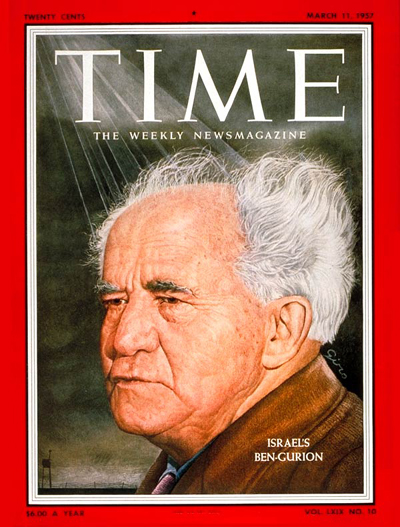
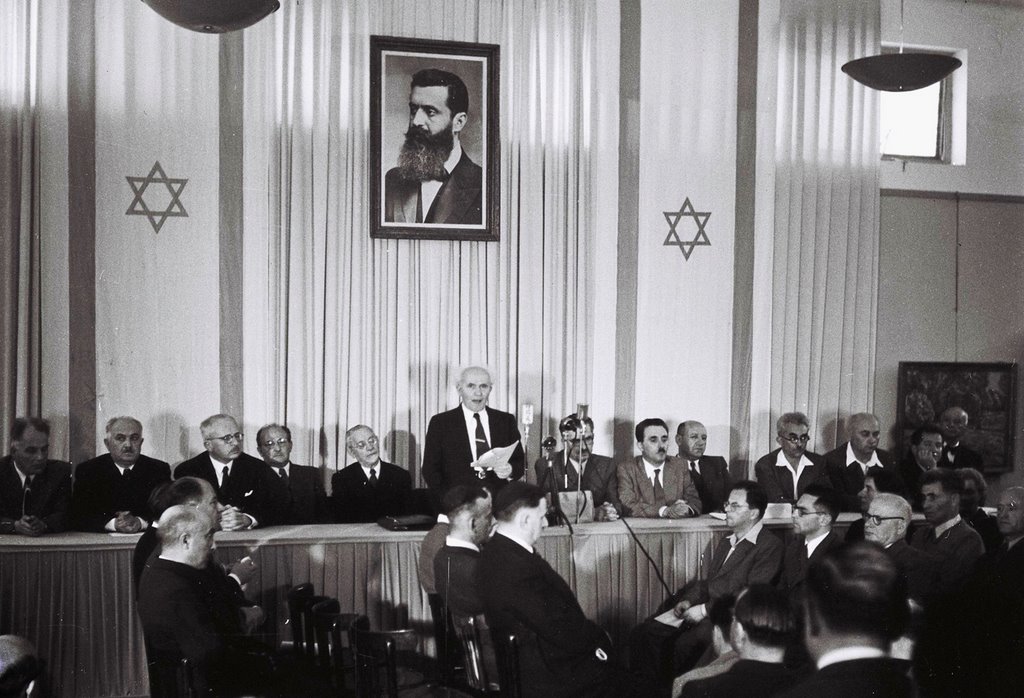
But first, Morris points out that Zionist leaders such as David Ben-Gurion considered the forcible transfer of Palestinians to be necessary and just. As the future Prime Minister said in 1938, “I support compulsory transfer. I do not see in it anything immoral.” Other influential Israelis agreed, although both they and Ben Gurion felt that it would be best not to make their opinions known.
This position, however, does not seem to have resulted in any clear plan to force out the Palestinians. Rather, the refugee crisis developed in a series of unplanned stages:
The first was between December 1947 and March 1948, when the Yishuv [Jewish community in Palestine] was on the defensive and upper- and middle-class Arabs – perhaps as many as seventy-five thousand – fled, mainly from the mixed cities, or sent their dependents to the West Bank, Lebanon, Egypt, Syria or Transjordan. In this context their can be no exaggerating the detrimental effect on Arab morale of the IZL and LHI [i.e. Israeli militant/terrorist groups’] bombing campaigns in the big towns…I’m guessing that many of you, like me, would be interested in further details about those massacres, as well as their magnitude relative to Arab massacres. However, I don’t have such information on hand at the moment.
This was the background to the second stage, the mass flight from urban neighborhoods and rural areas overrun by the Jewish forces during spring 1948. The earlier flight of the elite sapped popular morale and gave the masses an example to emulate.
The principal cause of the mass flight of April-June was Jewish military attack, or fears of such attack. Almost every instance…was the direct and immediate result of an attack on and conquest of Arab neighborhoods and towns. In no case did a population abandon its homes before an attack; in almost all cases it did so on the very day of the attack and in the days immediately following. And flight proved to be contagious. The fall of, and flight from, the big cities – principally Haifa and Jaffa – radiated pessimism and despair to surrounding villages…
The slaughter on April 9 of the villagers of Deir Yassin, augmented by Arab atrocity propaganda regarding what happened there, both reinforced and symbolized [the tendency toward flight]. Fear that the same fate might befall them propelled villagers to flight, and this “atrocity factor” was reinforced periodically during the months of fighting by other Jewish massacres, especially in October…Altogether about two to three undred thousand Arabs fled their homes during this second stage of the exodus.
Anyhow, before this post gets too long, let’s move on to stages three and four. The political and military environment for these stages was very different, since they followed the official founding of the Jewish state and the subsequent declarations of war by its neighbors. Morris writes:
The pan-Arab invasion of May 15 clearly hardened Israel’s resolve regarding the Palestinian civilian population, for good military and political reasons.That of course is a judgment, with which pro-Palestinian writers would vigorously disagree. However, I tend to agree. Once invaded by Arab neighbors who rejected its right to exist, Israel had to be much more cautious about a resident Arab population that clearly sympathized with the invaders. But how far does caution go before it becomes provocation and abuse? I don’t have an answer to that question just yet. So back to the narrative:
In the third and fourth stages of the exodus, in July and October-November 1948, about three hundred thousand more Arabs became refugees, including the sixty thousand inhabitants of Lydda and Ramle who were expelled by IDF troops…Finally, there was unusual coda to these events, in terms of discussions about allowing refugees to return. One relatively deficient offer from the Israelis would have resulted in the return of 65,000 refugees. The terms of a second offer were that:
During the second half of the war, there was far less “spontaneous” flight. Most of the exodus at this time was due to clear, direct causes, including brutal expulsions and deliberate harassment.
Ben-Gurion clearly wanted as few Arabs as possible to remain in the Jewish state. But there was still no systematic expulsion policy; it was never, as far as we know, discussed or decided upon at Cabinet or IDF general staff meetings.
Israel might be willing to incorporate the Gaza Strip into its territory and absorb the Strip’s population of 60,000 native inhabitants and 200,000 refugees. In this way, Israel would have done more than its fair share toward resolving the problem – which, its officials tirelessly argued, was not of their own making. (Or, as Ben-Gurion was fond of telling Western interlocutors, “Israel did not expel a single Arab.”)At least according to Morris, those are those facts. What, then, is their significance, especially their moral significance? The nakhba was certainly a great tragedy, for which its victims deserve considerable sympathy.
The offer was seen by the Arabs as far too little, and most of the Arab states insisted that Israel take back all of the refugees.
A moral evaluation of the first two stages of the flight would seem to rest on one’s evaluation of the Palestinian Arabs’ fears. Was flight the only rational response to Jewish occupation, given that several massacres had taken place? Or did Arabs mainly fear that the Jews would treat them as Arabs treated vulnerable Jewish populations in the past?
An alternative hypothesis is that during the first two stages, those who fled had reasonable expectations of returning to their homes once the war was over. As Morris points out, the upper- and middle-classes had fled violence before, only to return to their homes.
Then, the pan-Arab invasion of May 1948 changed the situation dramatically. The stakes were raised tremendously for both sides. A strong case can be made that the Jewish side was fighting for its very existence. The Arab side faced the prospect that any land lost to the Jews would be lost forever.
For the moment, I’m still not sure how I feel about compulsory expulsion, planned or unplanned. Was it a military necessity? Was any effort made to conduct expulsions in a humane manner? If one sees the war of 1948-1949 as a war for Jewish survival, then these questions may become secondary.
But even if it weren’t a war for survival, the Israeli offer to accept back a significant number of refugees strikes me as morally significant. The Israelis sought a compromise solution that shared out the burden of settling the refugees. Of course, if one sees the nakhba as entirely the Israelis’ fault, then no compromise is just.
Yet from my perspective, it is the pan-Arab invasion of May 1948 that was the most important cause of the nakhba. As I see it, there was no reason for this invasion to happen, other than a total unwillingness by Arabs states to accept the existence of a Jewish neighbor. If not for the invasion, half of the refugees might never have left and the other half might have been resettled, even in their own homes.
I will close this very long post with another question. How do pro-Palestinian writers justify the invasion of May 1948? As an effort to protect and liberate the Arabs of Palestine? As an effort to reverse the emergence of a colonial state whose very existence was an injustice?
For the moment, I can’t imagine any moral argument that would justify untrammeled aggression. Then, as now, compromise is the only hope for peace. Instead, one side refused to accept the existence of the other.
Labels: Ben Gurion, Benny Morris, Israel, Nakba, Palestinians
(18) opinions -- Add your opinion

